The United States boasts the world's most concentrated educational resources, with 46 top-tier universities ranking among the global top 100. It is also the world's largest economy, with a GDP of approximately $21 trillion. With 160 years of development in its real estate brokerage system, the U.S. has become one of the world's most transparent and mature property markets—offering a stable investment environment with clear rules.

Geographical Location
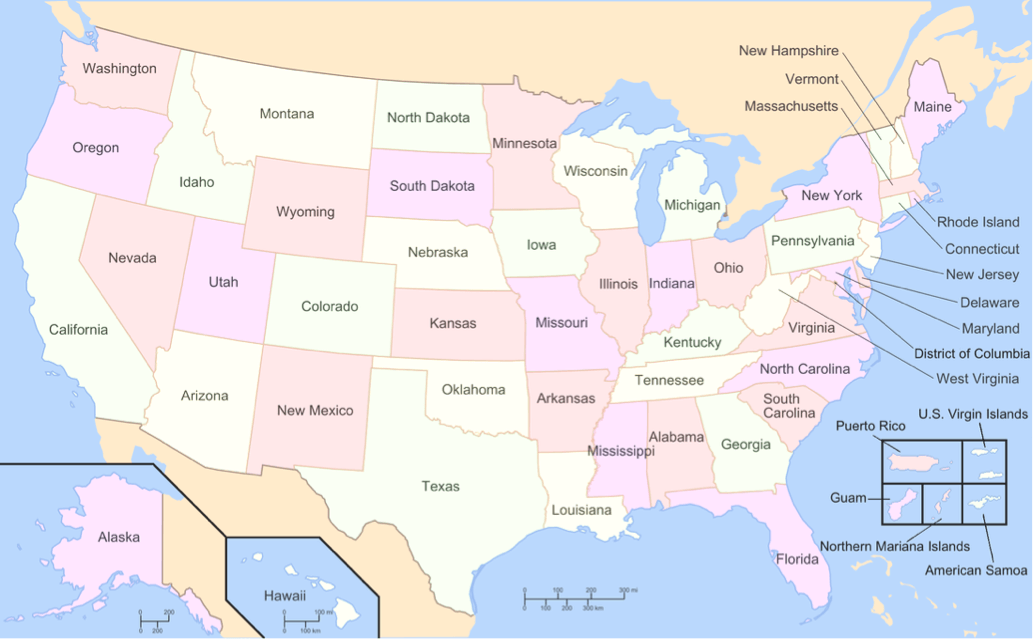
The United States of America is located in central North America, also including Alaska and Hawaii. It borders Canada to the north, the Gulf of Mexico to the south, and is flanked by the Atlantic Ocean to the east and the Pacific Ocean to the west. Its land area is about 9.37 million square kilometers, ranking fourth in the world.
The country is divided into 50 states and one federal district (District of Columbia), which are further subdivided into 3,144 counties.
"A U.S. 'state' is analogous to a Chinese 'province,' while the administrative concept of a 'county' differs: in most cases, counties are larger than cities, but there are exceptions like New York City.

Demographics
The U.S. population is approximately 350 million, making it the third most populous country globally. California has the largest population, exceeding 40 million; New York City is the most populous city, with nearly 9 million residents, significantly larger than the second-ranked Los Angeles.
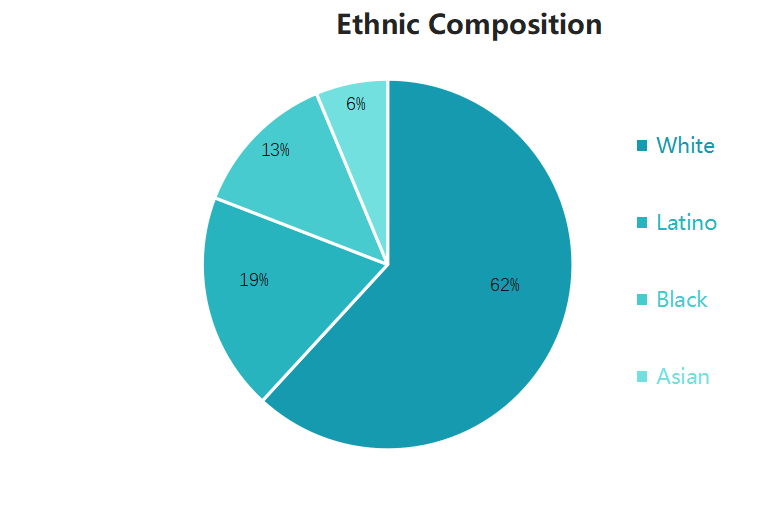
White people account for about 60.1% of the population, although the proportion of whites under 16 years old has fallen below 50%. The Hispanic/Latino population constitutes about 18.5%, Black/African Americans 12.5%, and Asian Americans, at 6.1%, are the fastest-growing ethnic group over the past decade. This diverse structure adds to the inclusiveness and vitality of major U.S. cities.
English is the primary language, with American English differing from British English in pronunciation and spelling. Spanish is the most common second language, with about two-thirds of the population having some proficiency; French and other languages follow.
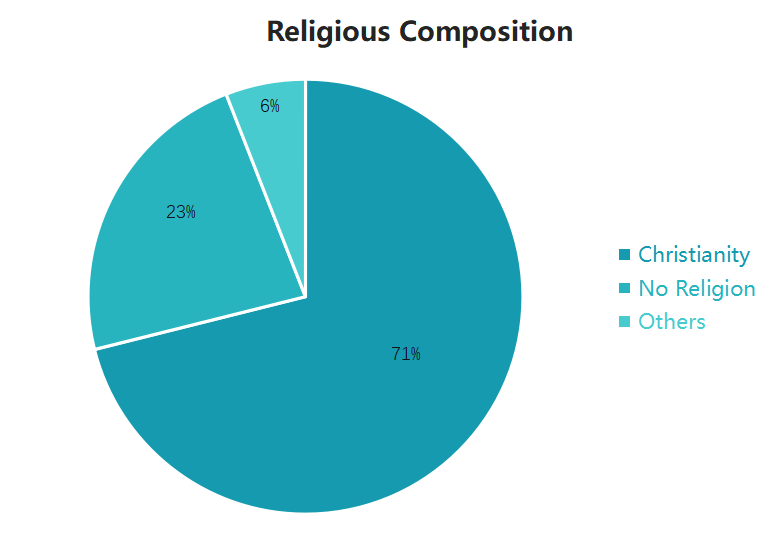
Christianity accounts for about 70.6% of the population, other religions 5.9%, and the unaffiliated 22.8%.
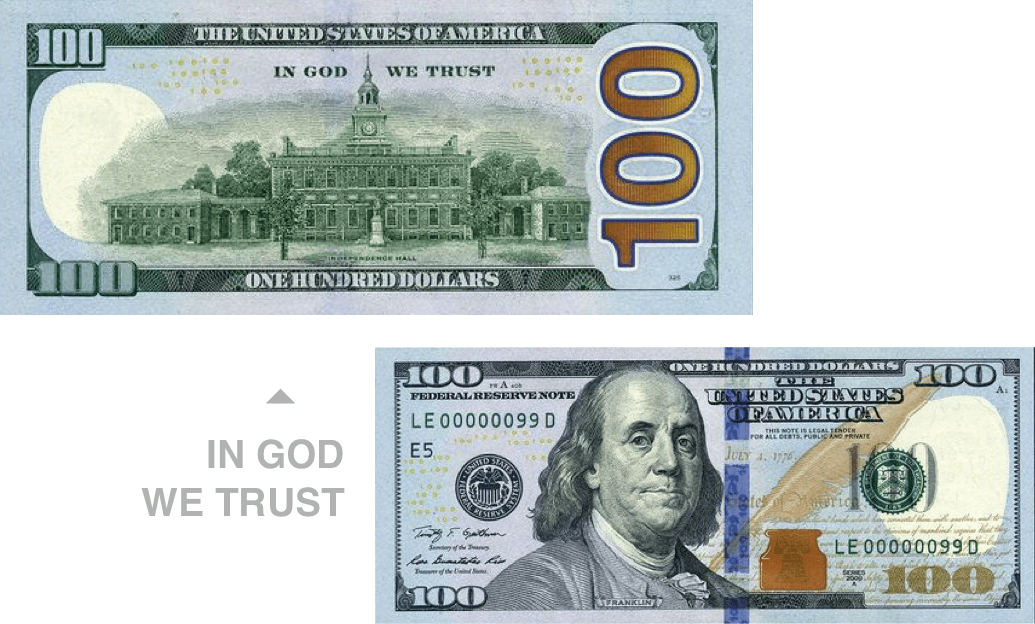
Religious elements are deeply embedded in public life: traces can be seen from political speeches to the education system, and from the phrase 'In God We Trust' on currency to the founding of community schools.
"Despite its strong religious character, the U.S. maintains a high degree of religious freedom, with different faiths coexisting within the same cities. Especially in international hubs like New York and Los Angeles, the fusion of multiculturalism and diverse ethnic groups has become commonplace. While occasional conflicts may be amplified in reports, generally speaking, larger cities tend to be more inclusive.

Time Zones
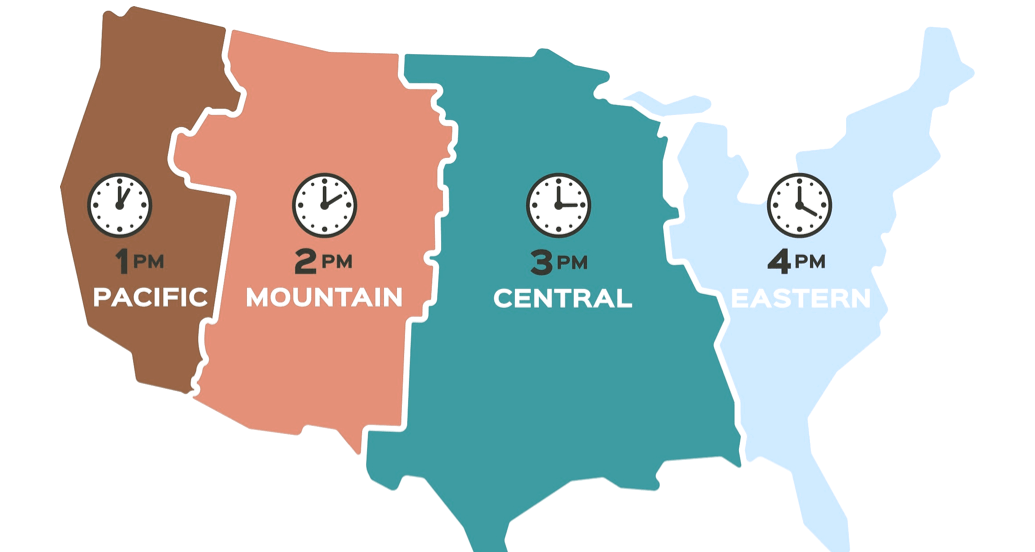
The vast U.S. territory spans multiple time zones, from east to west: Eastern Time (UTC-5), Central Time (UTC-6), Mountain Time (UTC-7), and Pacific Time (UTC-8). Due to the long-standing practice of Daylight Saving Time, at 2:00 AM on the second Sunday in March, clocks nationwide are set forward by one hour; they are set back on the first Sunday in November, to better utilize daylight hours for production and daily life.
"Taking New York as an example, during DST, the time difference with China is exactly 12 hours (day and night are reversed); the Pacific Time Zone where Los Angeles is located has a 15-hour difference with China. The time difference extends by one hour each when Standard Time takes effect. Therefore, working hours in China and the U.S. are mostly misaligned.

China-US Flights
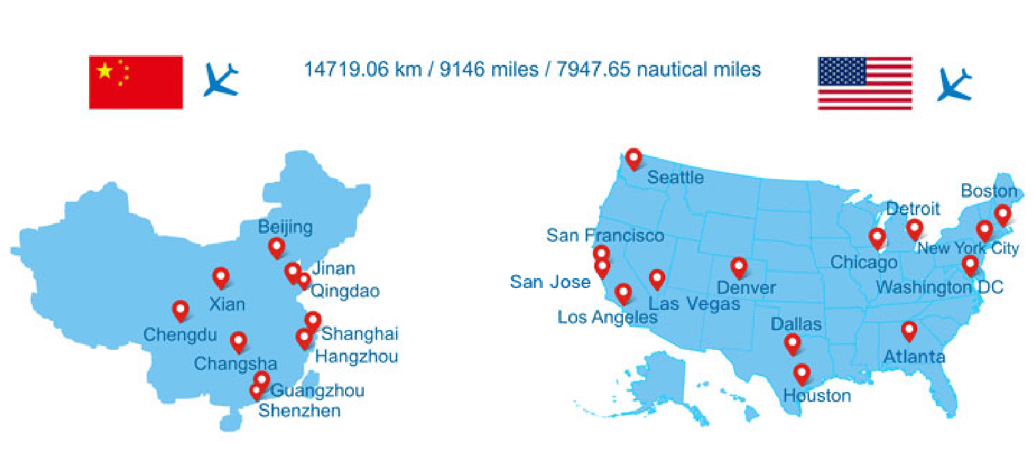
Currently, about 10 cities in China offer direct flights to the United States, with a total of approximately 50 weekly flights.
"The one-way flight duration typically ranges from 10 to 18 hours. Peak travel seasons include summer vacation, Christmas, and New Year holidays, during which economy and business class tickets are generally close to full price, often exceeding 10,000 RMB. During the off-peak season, discounted direct flight tickets can occasionally be found for around 3,000 RMB, showing a significant price difference.

Economic Level
The U.S. has the world's largest GDP.
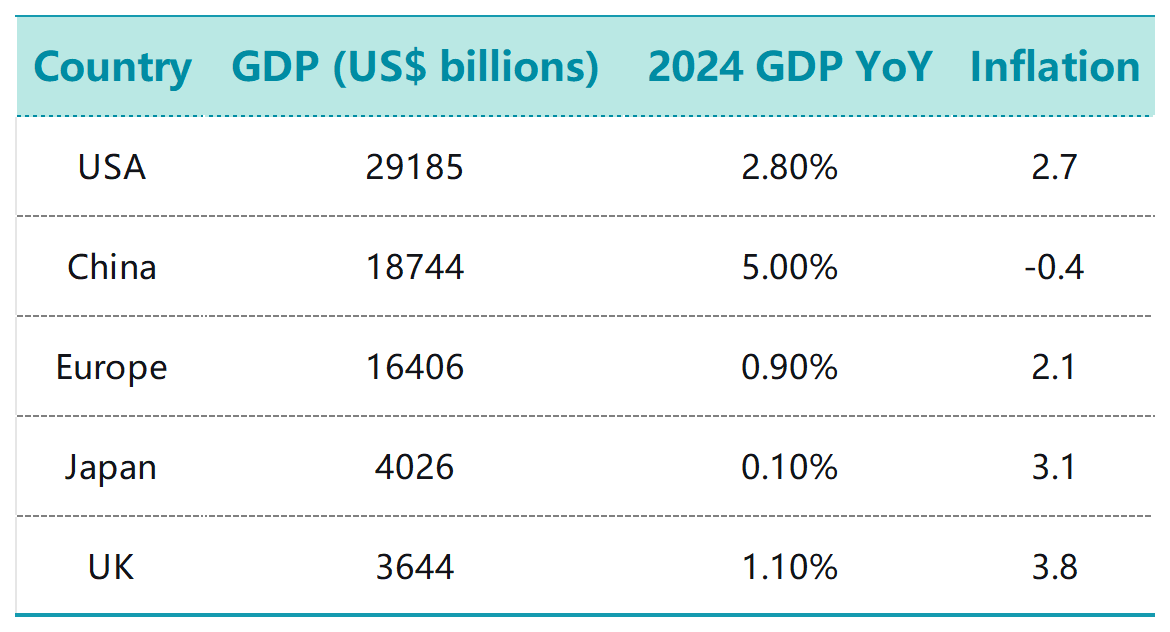
As of 2025, the United States remains the world's largest economy, with a GDP reaching $29 trillion. The gap with China is narrowing: in 2020, the U.S. economy was nearly twice the size of China's, but now the gap has narrowed to about 1.35 times. The economic scale of both countries exceeds the combined GDP of the entire European continent, far surpassing Japan, which ranks third. According to World Bank data, China's GDP grew 5% year-on-year in 2024, leading the aforementioned regions, while the U.S. recorded a 2.8% increase. The global economic landscape is presenting a 'dual-engine' structure.

Primary and Secondary Education
Basic education in the U.S. is mainly divided into public and private schools. Public schools are tuition-free but usually only available to U.S. residents, citizens, or holders of certain long-term visas; private school tuition is relatively high and varies by region.
Public schools are jointly funded and managed by the federal government, state governments, and local school districts. Over 90% of American students attend public schools. The federal Department of Education is responsible for policy research and formulation but does not directly manage local schools, making the authority system different from China's.
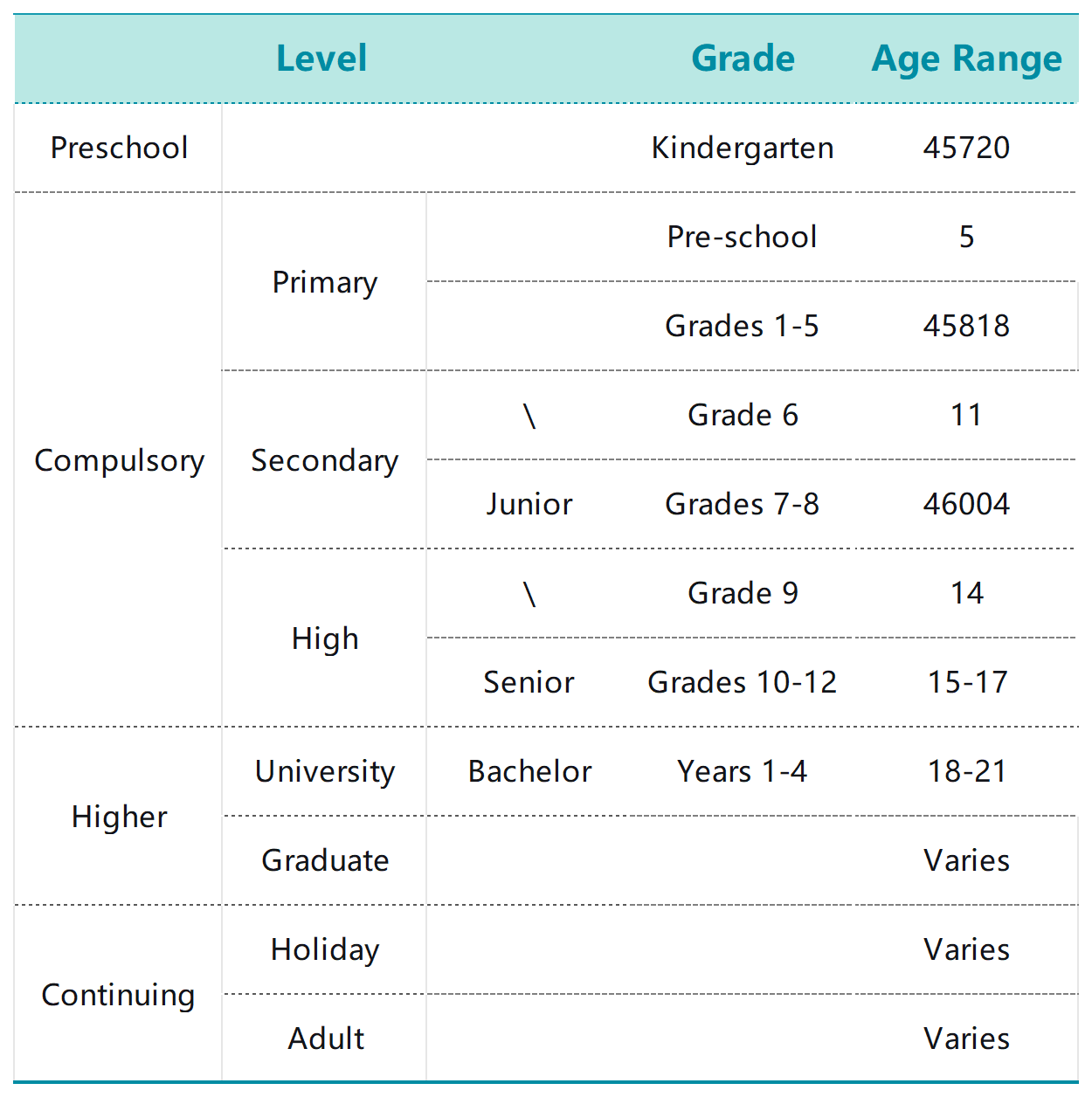
The U.S. education system, similar to China's, also implements a K-12 system, including kindergarten, elementary school (K-5, ages 5-11), middle school (grades 6-8, ages 12-14), and high school (grades 9-12, ages 14-18), totaling 13 years of compulsory education.
""School districts" are also a key concept in the U.S. Property tax revenue from an area is directly invested in local schools, so the quality of education in a school district often reflects the area's affluence. High-quality school districts directly impact the rental and sales demand for properties. While not as fervent as China's "school district housing," the school district factor remains an important consideration for homebuyers and investors.

Higher Education
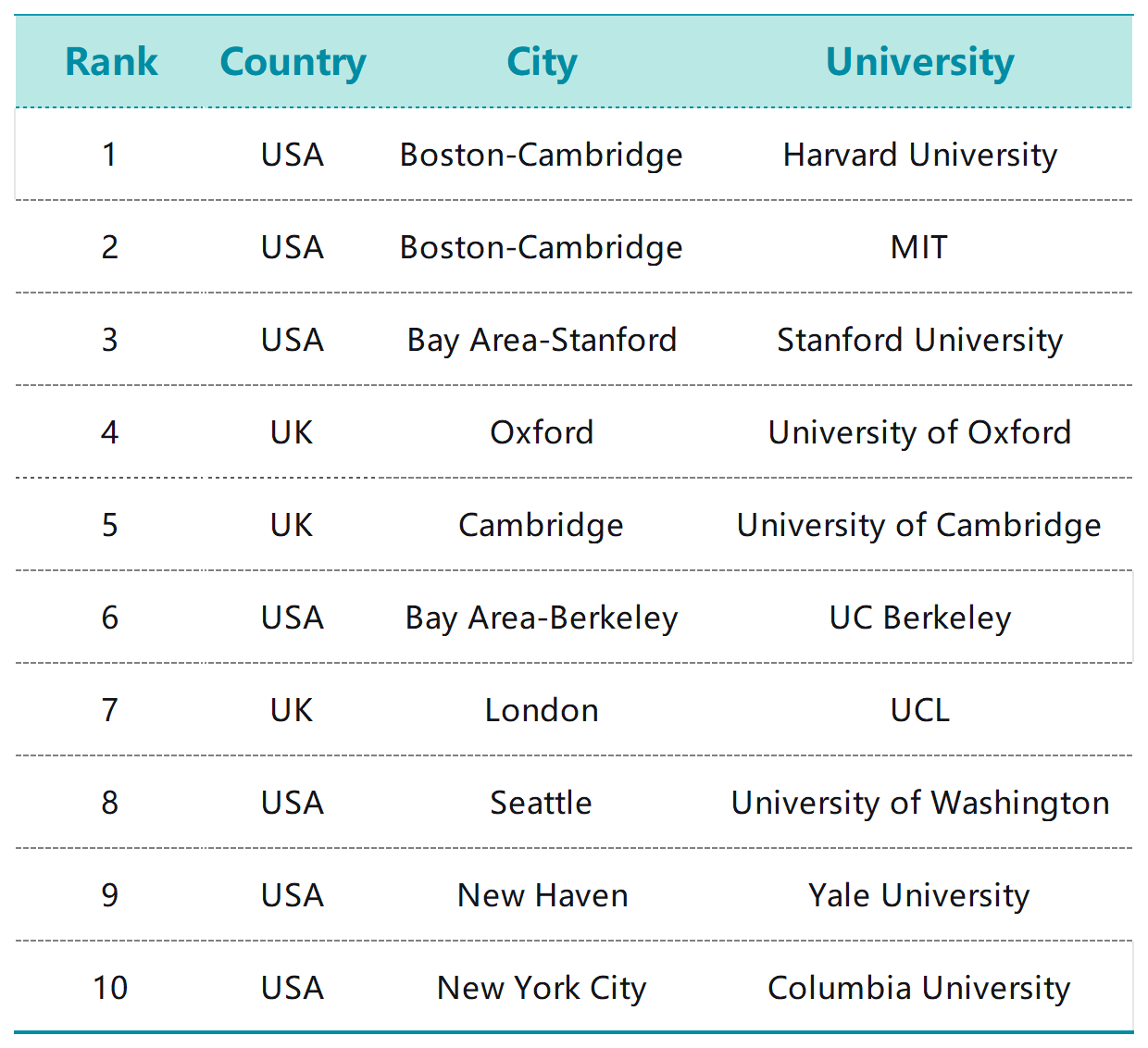
The U.S. holds an overwhelming advantage in global higher education. According to the US News 2025-2026 Best Global Universities rankings, 38 of the top 100 are located in the U.S., maintaining the world's top position for many years. Among the top 10, 7 are from the U.S., and the remaining 3 are from the UK.
Chinese universities have shown significant improvement in recent years, with 11 now in the top 100, including Tsinghua University at 11th and Peking University at 25th.
"In the U.S., a top university means not only a highly valuable diploma but also a powerful alumni network. Alumni resources often play a long-term role in career and business development. This is why American universities hold strong appeal for Chinese families considering overseas study.
The U.S. does not have universal public health insurance. Social healthcare primarily covers the elderly and vulnerable groups, while the vast majority of the working population relies on commercial insurance (purchased by employers or individuals). Therefore, the income for doctors and medical institutions comes mainly from insurance companies.
The healthcare industry holds an important position in the U.S. economy: hospital and physician services are among the largest industries nationally, accounting for about 8.9% of GDP, much higher than the construction industry's 3.6%. Notably, most U.S. physicians are private practitioners; the majority are not hospital employees but operate independently, using hospital facilities and equipment to treat patients.
Different types of commercial insurance determine how one accesses care. For example, with a Health Maintenance Organization (HMO), one must designate a Primary Care Physician (PCP) who acts as a "gatekeeper" for common illnesses and referrals; one cannot directly see a specialist or go to a large hospital. With a Preferred Provider Organization (PPO), one can directly visit specialists. Although PPO monthly premiums are typically about twice those of HMOs, their share is increasing yearly due to greater convenience.
"Overall, the U.S. has high medical standards, but healthcare resources are still strained. Low-income individuals often face long wait times, leading some to choose more expensive private hospitals. For new immigrants, purchasing suitable commercial insurance is particularly crucial, as out-of-pocket medical expenses could otherwise become a heavy family burden.
A common saying in the U.S. is: "Nothing is certain but death and taxes," highlighting the importance of taxes in social life.
Due to differences between state and federal tax systems, we list only common types of taxes in American life for reference. Individuals holding a U.S. passport or green card, E/H class visas, or foreigners staying in the U.S. for more than 183 days within a year are obligated to pay taxes. April 15th is the annual deadline for filing federal and state tax returns.
The U.S. practices "worldwide taxation" but aims to avoid "double taxation." If part of overseas income has already been taxed in another country, the U.S. allows a corresponding tax credit. Simultaneously, there is an annual exclusion amount for foreign-earned income ($105,900, adjusted for inflation). U.S. tax filing requirements are strict, but it's not about multiple layers of taxation, so foreign investors need not be overly concerned.

Federal Tax
2.9% for family annual income below $250,000, and 3.35% above that. Generally, the employer pays half. Used to provide health insurance for those over 65 and disabled individuals.
12.4%, with a taxable income base cap of $132,900 (adjusted for inflation). Income above this cap is not taxed. Generally, the employer pays half. Used to pay pensions to retirees who have paid into Social Security for at least 10 years.
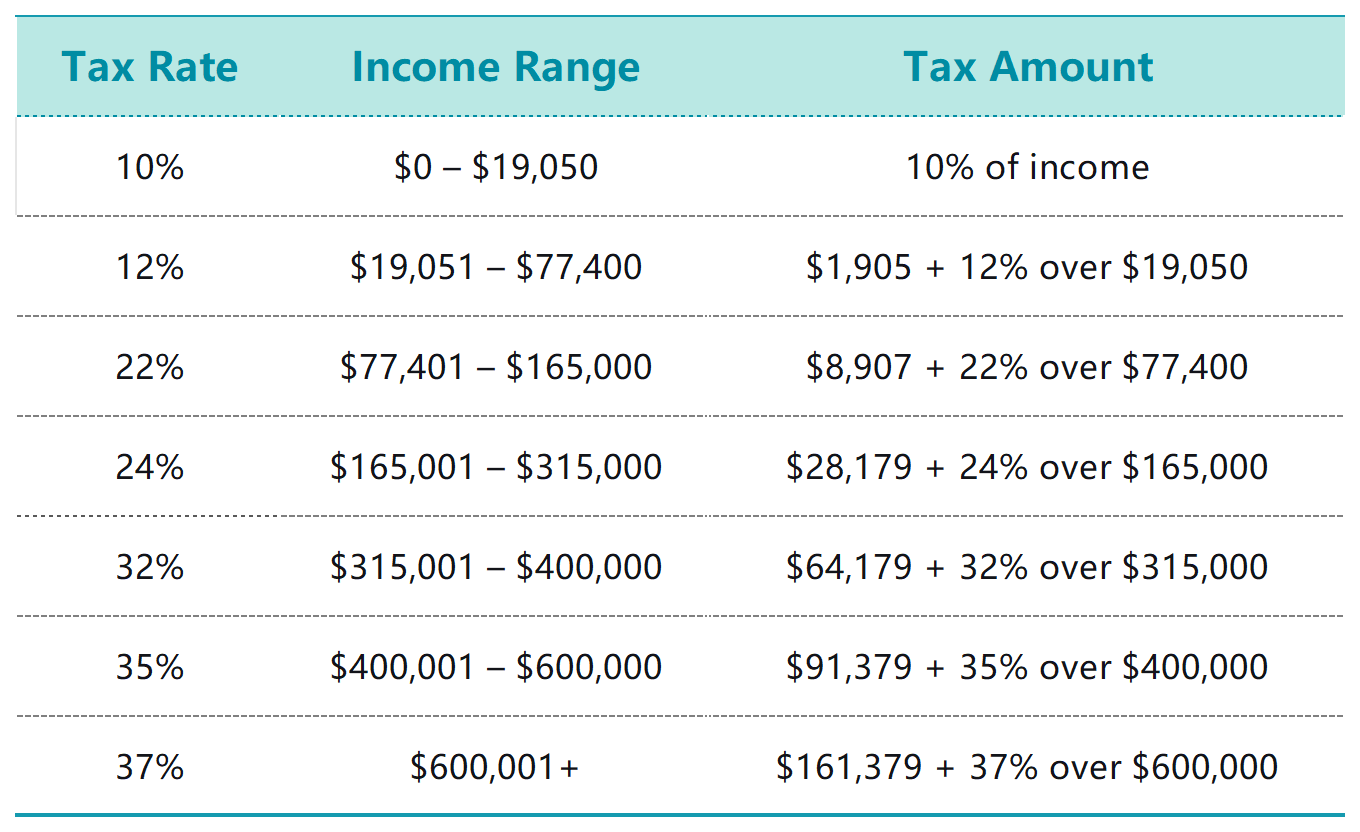
Varies based on filing status (e.g., single, married filing jointly). The tax brackets and rates differ for each status. The following example uses married filing jointly; different rates apply only to the income portion within each bracket.
State Tax
Set by individual states, so rates vary significantly. Currently, 7 states have no state income tax: Texas (home to Dallas, Houston), Florida (Orlando, Miami), Nevada, South Dakota, Alaska, Washington (Seattle), Wyoming.
A local tax (city/county). Rates vary greatly by location. For example, New York imposes a 1% mansion tax on properties over $1 million, and some areas in Los Angeles add infrastructure taxes. Property taxes primarily fund local public education.
Automatically deducted during everyday purchases. The labeled price of goods or services does not include tax, so the actual purchase price is higher than the listed price. Currently, 5 states have no sales tax; rates in other states range from 5% to over 10%, paid directly at checkout.

Deductions
Although U.S. taxes are numerous, the system also humanely establishes many itemized deductions to reduce taxable income, such as moving expenses, alimony payments, student loan interest, tuition fees, being 65 or older (head of household or spouse), being blind, standard deduction, personal exemptions, etc.
"For customers with owner-occupier needs, they will basically encounter all the tax types mentioned above. For customers with investment needs, as long as they avoid staying in the U.S. for more than 183 days cumulatively within a year, they can avoid most taxes, generally only being taxed on income generated within the U.S.

Advancement and Security
The U.S. is one of the world's most transparent and mature real estate markets. Its real estate brokerage industry history dates back 160 years, far ahead of most countries, specifically reflected in the following aspects:
As early as 1919, the U.S. required licensing for real estate brokers, indicating a high degree of standardization.
Transparent Property Information
Zero-barrier public websites like Zillow and Redfin allow buyers and sellers to access house prices, conditions, and even historical transaction records at any time, minimizing risks from information asymmetry.
MLS System (Multiple Listing Service)
The Multiple Listing Service covers almost all regions across the U.S. Almost all listed properties can be found on the MLS platform, breaking down barriers between brokerage firms and enabling buyers and sellers to make decisions based on the most comprehensive market information.
Most transactions involve a buyer's agent and a seller's agent representing their respective clients, similar to the legal system, ensuring the negotiation process truly serves the client's interests.
When buying new or resale homes in the U.S., the buyer typically does not pay the agent commission. Prices are transparent, avoiding concerns about hidden fees or price markups.

Market Data
According to the National Association of Realtors (NAR) "International Transactions Report" for 2024-2025:
Foreign buyers purchased approximately 78,000 properties, totaling about $56 billion;
The median purchase price for foreign buyers was $494,000, higher than the U.S. median of $408,000;
Chinese buyers remained the largest foreign group, purchasing 11,700 properties (15% share), with a purchase volume of $13.7 billion, more than double that of Canadian buyers;
The average purchase price for Chinese buyers was $1.168 million per property, about 62% higher than the foreign buyer average of $719,000;
California remains the top choice for Chinese buyers (36%), followed by Maryland and New York (9% each), and Hawaii (5%).
"After a consecutive decline since the 2017 peak, foreign purchases in the U.S. bottomed out in 2024 ($42 billion) and rebounded to $56 billion in 2025, exceeding pre-pandemic levels. The stability and safe-haven function of USD-denominated assets remain core concerns for global high-net-worth clients.

Rental Returns
According to Global Property Guide (GPG), the national average gross rental yield in the U.S. is approximately 2.91%. There are significant variations between cities and property types; the Price-to-Rent Ratio (house price ÷ annual rent; a lower number indicates faster cost recovery) is around 25 in a normal market.
According to Local Market Monitor (LMM) data:
Boston: Price-to-Rent Ratio 22 - High prices, developed city, but stable rental market;
Orlando: Price-to-Rent Ratio 18 - Significant population growth and price increases, considered a high-potential city.
If the primary goal is investment for rental income, single-family homes in markets with a Price-to-Rent Ratio below 21 are more attractive.
Conversely, first-tier cities like New York, Los Angeles, and the Bay Area have high prices and limited rental yields. However, they have stable rental demand and concentrated high-end clientele; their investment value lies more in asset stability and international diversification.
"Investors should clarify their needs: seeking stability and risk resistance, or higher paper returns. Overall, U.S. rental returns are generally higher than those in Chinese first-tier cities, but the gap is not vast. More reasonable considerations should be risk diversification, capital flexibility, and global asset allocation.

Investment Outlook
Overall, long-term appreciation rates for U.S. real estate are relatively limited, especially in first-tier cities where the market is mature and prices are stable, rarely experiencing sharp fluctuations. But it is precisely this stability that makes it a "safe haven for overseas funds" for some investors.
For high-net-worth individuals, allocating real estate in the U.S. is not only about asset preservation but also about achieving diversified allocation of currency and assets globally to cope with economic cycles and uncertainty.
Overseas buyers primarily concentrate on the East Coast, West Coast, and the southern state of Texas. The most popular cities for Chinese buyers remain: New York and Boston on the East Coast, Florida, and Seattle, the San Francisco Bay Area, and Los Angeles on the West Coast.

New York
View City Guides
Taking Manhattan as an example, the price per square foot is among the highest in the U.S. The New York area is predominantly apartments, but there are also single-family homes in areas like Long Island. For investment-oriented buyers, New York's advantage lies in its largest population size and dual CBDs (Manhattan and Brooklyn) providing solid support, keeping prices and demand stable long-term, thus offering strong risk resistance. Net rental yields can reach up to 3%.
Boston
View City Guides
The city of Boston itself is mainly apartments, while the surrounding areas feature single-family homes. Education and healthcare industries are highly developed, with over a hundred universities and research institutions. For owner-occupier buyers, low-density single-family homes in quality school districts around the city (e.g., Lexington, Wellesley) are recommended. For investment buyers, apartments in business districts or student apartments in the Cambridge area are recommended. Rental yields can reach up to 5%.
Orlando
View City Guides
Taking downtown Orlando as an example, housing prices fall into the category outside first-tier cities, with lower total prices. Its advantage lies in having the world's largest Disneyland—with 70-80 million tourists visiting annually, the occupancy rate of short-term rental properties is very impressive, leading to higher rental returns. Many projects offer developer-guaranteed rentals, with maximum rental yields up to 10%.
Seattle
View City Guides
Taking the Greater Seattle area as an example, Seattle is known as the "Second Silicon Valley." As one of the closest major U.S. cities to China and with no state income tax, it imposes a lighter burden on businesses and residents. The city center is mainly apartments, with high-rises offering bay views; the Eastside (Bellevue) has both apartments and single-family homes with quality school districts, but new projects are in short supply. Maximum rental yield is about 3.5%.
San Francisco Bay Area
View City Guides
The Bay Area flourished with Stanford University, and Silicon Valley is now a global hub for semiconductors and biotechnology, with over 30 Fortune 500 global company headquarters located here. New housing supply near Silicon Valley is extremely scarce; prices are high but rising steadily, and "hard to find a property" is the norm. For owner-occupier buyers, single-family homes in the East Bay and around Silicon Valley are recommended. For investment buyers, townhouses in the East Bay or apartments in San Jose are recommended. Taking Sunnyvale in Silicon Valley as an example, rental yields can reach up to 3%.
Los Angeles Metropolitan Area
View City Guides
Irvine was master-planned and developed by the "Irvine Company" starting in the 1960s, making it highly systematic in urban planning, public safety, education, and consumer entertainment. Repeatedly named one of America's safest cities, coupled with top school districts, it has become a popular destination for Chinese homebuyers. For owner-occupier buyers, single-family homes are recommended; for investment buyers, apartments or townhouses are recommended. Taking Irvine as an example, the maximum rental yield is about 2.5%.

Purchasing Strategy
China has implemented the CRS (Common Reporting Standard) and signed tax information exchange agreements with many countries to share overseas asset information and ensure tax compliance. However, the U.S. has not joined CRS, and currently, CRS exchange content does not include real estate.
Additionally, there is no concept of "Saleable Area Rate" when buying property in the U.S. because there is no "shared common area." Compared to China's common 25%-30% shared common area, the effective price per usable area in the U.S. is actually lower.
Furthermore, U.S. real estate entails permanent ownership (freehold), with no distinction like China's "Big Property Right/Small Property Right," and can be passed down through generations. Purchasing a single-family home includes private ownership of the land, which makes inheritance more valuable—since buildings depreciate, but land does not.

Purchase Costs
a. Loan Origination Fee
Generally around 1% of the loan amount, though some lenders charge a flat fee
b. State and City Transfer Tax/Recording Fees
Varies by location. e.g., New York: 1.825% on properties over $500,000
c. Mansion Tax
e.g., New York imposes a 1% tax on properties sold for $1 million or more
d. Other Miscellaneous Fees
Such as document fees, recording fees, etc. Each ranges from tens to hundreds of dollars
e. Homeowner's Insurance
Generally required if financing. Varies based on coverage chosen.
f. Attorney Fees
Required in some areas for transaction closing. Separate fees for buyer's and seller's attorneys, generally $1,000 - $5,000
a. Property Tax
Varies significantly by location and project
b. HOA Fees / Homeowners Association Fees
Varies significantly by location and project. Generally, non-HOA communities (e.g., many single-family home areas) have no HOA fees
c. Community Infrastructure District Tax / Mello-Roos
Specific to some areas in California, approximately 1% of the property value annually
Management and Transaction Fees (if using agents/property managers)
a. Leasing Fee
For entrusting an agent to find a tenant, typically equivalent to one month's rent
b. Sales Commission
Generally 5-6% of the sale price, split between the listing and buyer's agent
c. Property Management Fee
For handling daily property matters when the owner is absent, generally 5%-10% of the monthly rent

Loan Application Process
Reserve the property / Sign purchase agreement & pay deposit
Sign contract and pay deposit
Select a lender and initiate appraisal process
Formally apply for the loan 3 months before closing
Pay the remaining balance (non-loan portion) and relevant taxes/fees before closing
Final walk-through and closing (transfer of title)
Get pre-approved by a lender
Obtain the pre-approval letter from the lender
Select a property and submit an offer
Seller accepts the offer
Pay earnest money deposit according to the contract
Formally apply for the loan
Pay the remaining balance (non-loan portion) and relevant taxes/fees before closing
Final walk-through, closing (transfer of title), and possession
Final walk-through and closing (transfer of title)
Disclaimer: All the above information about the country is sourced from the Internet and is for reference only. If there is any discrepancy with the actual situation, the actual situation shall prevail. If there is any error in the information, please contact us to correct it in a timely manner.