

Log In


Preference


Singapore Guide
Investment Advantages
Singapore is renowned for its political stability, sound legal system, and clear property rights. Its transparent and predictable institutional environment significantly reduces policy and legal risks, making it one of the most valued conditions for international investors. Due to limited land area, the supply of residential land, particularly in the Core Central Region (CCR) and Rest of Central Region (RCR), is strictly controlled. The government regulates the supply of new developments through the Government Land Sales (GLS) program and comprehensive urban planning to maintain long-term market balance and health.
Country Profile

Geographical Location
Singapore (also known as the "Lion City") is located at the southern tip of the Indochinese Peninsula in Southeast Asia, at the entrance of the Strait of Malacca. It is separated from Malaysia to the north by the Johor Strait and borders the Indonesian archipelago to the south. Comprising the main island and 63 surrounding islets, Singapore has a total area of approximately 719.9 square kilometers (equivalent to the area within Beijing's Fifth Ring Road). It spans about 50 kilometers from east to west and 26 kilometers from north to south. The terrain is generally low-lying, with an average elevation of 15 meters. The highest point, Bukit Timah Hill, stands at 163.63 meters, and the coastline extends over 200 kilometers. As a city-state, Singapore has no provinces or cities. The country is divided into five communities (Northeast, Southeast, Northwest, Southwest, and Central), managed by their respective Community Development Councils.

Demographics
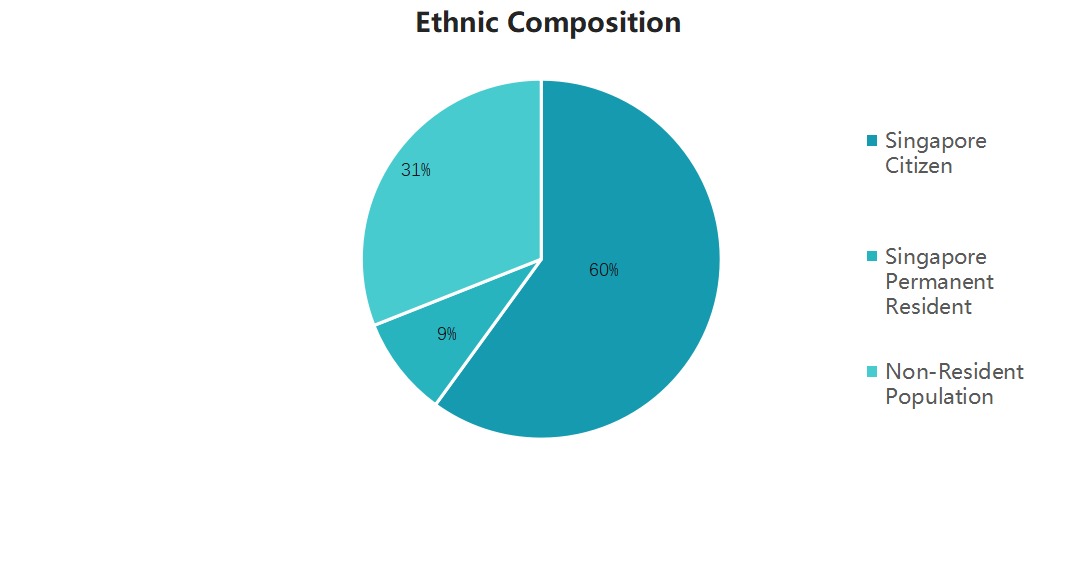
As of June 2024, Singapore's total population is approximately 6.037 million, representing a year-on-year increase of 2.0%. Among them, the resident population (citizens and permanent residents) accounts for 4.181 million, nearly 70% of the total population. Citizens number about 3.636 million, while permanent residents total around 545,000. The non-resident population is approximately 1.86 million, showing a 5.0% year-on-year growth.With a population density of about 8,220 people per square kilometer, Singapore is one of the most densely populated countries in the world, second only to microstates like Monaco.
Ethnic Composition
Singapore is a typical immigrant nation. Among its citizen population, ethnic Chinese constitute 74.3%, Malays account for 13.5%, Indians make up about 9%, and the remainder comprises Eurasians and other ethnic groups (approximately 3.2%). Most ethnic Chinese trace their ancestry to southern China, particularly Fujian, Guangdong, and Hainan, with significant populations from Teochew, Cantonese, Hakka, Hokchew, and Hinghua communities. Additionally, there are Peranakans (descendants of early Chinese immigrants who intermarried with Malays).
Language
Singapore is a multilingual country. Its official languages include English, Mandarin, Malay, and Tamil. Malay is the national language, while English serves as the primary administrative and official documentation language.
Religion
Religious beliefs are diverse. Buddhism is the largest religion (approximately 33.2%), followed by Christianity (18.8%), Islam (14.0%), Taoism (10%), and Hinduism (5%). About 18.5% of the population reported no religious affiliation (2015 data).

Time Zone
Singapore is in the UTC+8 time zone (East Eighth Zone), with no time difference from Beijing. It observes standard time year-round and does not implement daylight saving time.

China-Singapore Flights
Singapore's Changi International Airport is a major global aviation hub. As of May 2019, 18 airlines operated direct flights to 30 cities in mainland China, with Beijing, Shanghai, Shenzhen, Guangzhou, and Hong Kong being the main destinations. Weekly flight frequencies were approximately 113 in summer and 106 in winter.Direct flight durations range from 3.5 to 6 hours. Peak seasons include January, February, July–August, and December, during which ticket prices often exceed 10,000 RMB. March and June are off-peak seasons, with one-way tickets available for as low as 1,500–3,000 RMB.

Economic Level
Singapore is the world's 39th largest economy, with a GDP of USD 547.39 billion (approximately SGD 737 billion) in 2024, reflecting a year-on-year growth of 4.4%. Its per capita GDP is about USD 90,700, ranking among the highest globally. Official foreign exchangereserves reached USD 386 billion by the end of 2024, maintaining a consistently high level.According to the 2024 Singapore Labour Force Report, the median monthly salary for full-time resident employees was SGD 5,197 (approximately RMB 27,800), showing significant growth compared to 2020. By the end of 2024, Singapore's personal savings rate stood at 46.2% (compared to China's 45.6%), with an inflation rate of 3.3% and an unemployment rate of 2.0% (compared to China's 5.0%).Since the 1970s, Singapore has gradually shifted away from reliance on entrepôt trade, evolving into one of the "Four Asian Tigers." Today, its economy is supported by key pillars such as financial services, trade, tourism, and manufacturing:In finance, Singapore is the world's fourth-largest foreign exchange trading center.In energy, its refining capacity is twice its domestic consumption, making it a core refining hub in Southeast Asia.In biomedicine, all of the world's top ten pharmaceutical companies have established bases in the Biopolis and Tuas Biomedical Park.
Educational Resources

Primary Education
Singapore's education system is divided into public and private institutions. Private schools generally have higher tuition fees, which vary by campus and curriculum. Public schools are free for Singaporean citizens, but permanent residents and international students are required to pay tuition. For example, for Chinese international students:primary school costs approximately SGD 763 per month (about RMB 3,700), secondary school about SGD 1,420 per month (about RMB 6,800), and pre-university (primarily Junior College, JC) about SGD 1,777 per month (about RMB 8,500).Education in Singapore uses English as the primary medium of instruction and is divided into 3-4 stages:Kindergarten (4-6 years old): Pre-school education.Primary School (7-12 years old): A 6-year system, which is compulsory and free for citizens.Secondary School (13-17 years old): Students are streamed based on their Primary School Leaving Examination (PSLE) results.Post-Secondary Education (after 16/17 years old): Students proceed to Junior Colleges or vocational institutions.The streaming system is a distinctive feature of Singaporean education:Integrated Programme (IP): Top-performing students (approximately the top 5%) can directly enter a 6-year course (4 years of secondary education + 2 years of pre-university). They take the GCE A-Level examination at the end, facilitating direct entry to university.Express Stream: About 50% of students enter this stream, leading to the GCE O-Level examination after 4 years.Normal Stream (Academic/Technical): Around 45% of students enter this stream. Students first take the GCE N-Level examination; some may proceed to take the O-Levels in a fifth year. Many students enter the Institute of Technical Education (ITE) for vocational training or enter the workforce directly.Additionally, the Singapore government allows 15 primary schools to offer the "Special Assistance Plan (SAP)" programme with an emphasis on Chinese language and culture. Among these, Nanyang Primary School, Nan Hua Primary School, Tao Nan School, and Catholic High School (Primary Section) are regarded as the "top four" prestigious schools. Public primary schools utilize a school zoning system, with priority given in this order: citizens within 1 km, then within 2 km, followed by those within 3 km. Admission outcomes are also influenced by population density, gender ratio, and competition levels.

Higher Education
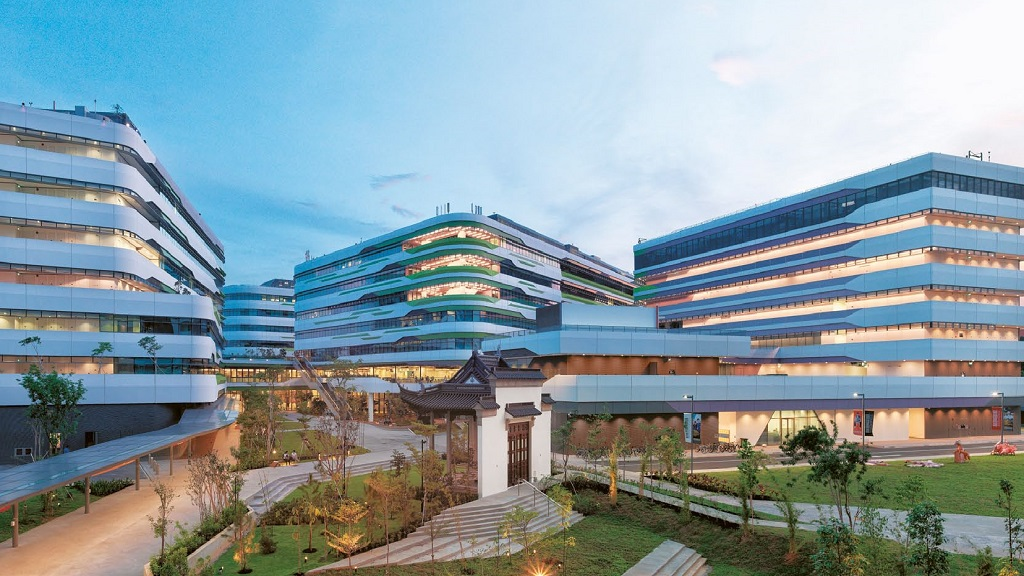
Singapore boasts world-class higher education institutions, primarily centered around two public research-intensive universities:National University of Singapore (NUS): Ranked 11th globally in the 2021 QS World University Rankings. It holds global influence in fields like Engineering & Technology, Life Sciences, Biomedical Sciences, Social Sciences, and Natural Sciences.Nanyang Technological University (NTU): Ranked 13th globally in the 2021 QS World University Rankings. It ranks 4th globally for Engineering & Technology, with Natural Sciences in the global top 14, and is known for its research intensity and engineering strengths.Singapore Management University (SMU): Focuses on business disciplines, ranking 38th globally and 7th in Asia for Business & Management Studies in the 2021 QS rankings.Overall, Singaporean universities consistently rank among the top in Asia and are globally competitive, particularly in business, science, and engineering fields.
Healthcare Resources
Singapore's healthcare system is renowned for its efficiency and quality, ranking 6th in the WHO's 2021 ranking of the world's best healthcare systems.Distribution of Medical Institutions:15 Public Hospitals: Including 6 acute general hospitals, 1 women's and children's hospital, 1 psychiatric hospital, 6 national specialty centers, and 1 multi-disciplinary medical center.21 Private Hospitals and Specialist Clinics.For primary care, approximately 80% of outpatient services are provided by private clinics/family doctors, with the remaining 20% handled by government polyclinics.Public hospitals are responsible for the majority (around 80%) of comprehensive medical care, specialist services, and 24-hour emergency services.National Health Insurance SystemSingapore's healthcare model combines government subsidies, compulsory individual savings, and social safety nets, forming a four-tiered structure: "Government Subsidies + Medisave + MediShield Life + Medifund".Government Subsidies:Outpatient Subsidies: 50% for adults; 75% for those under 18 and over 65.Inpatient Subsidies: Vary by ward class (A/B1/B2/C) at 0%, 20%, 65%, and 80% respectively. If hospital bills exceed certain thresholds (≥SGD 1,000 for B2, ≥SGD 500 for C), Medisave can be used for payment.Medisave:A compulsory individual medical savings account. Citizens contribute 7%–9.5% of their income, which can be used for hospitalization and specific outpatient expenses for themselves and their immediate family members.MediShield Life:A universal, compulsory catastrophic illness insurance scheme established in 1990. It provides basic, lifelong coverage with lower premiums for major illnesses or long-term chronic conditions, supplementing coverage when Medisave isinsufficient.Medifund:An endowment fund established by the government in 1993, primarily funded by government capital and its interest. It serves as a safety net to assist needy citizens with their healthcare costs.International Influence:Leveraging its high-quality medical services and multi-layered保障体系, Singapore not only provides excellent healthcare for its residents but also attracts nearly one million foreign patients annually, establishing itself as a key medical tourism hub in Asia.
Tax Policy
Corporate Tax:Singapore applies a uniform corporate tax rate of 17% on chargeable income for both local and foreign companies. This low rate, coupled with strong government support, is a key reason many businesses are keen to establish operations or subsidiaries in Singapore. Since 2020, eligible start-ups enjoy effective tax rates of 4.25% on the first S$100,000 of chargeable income and 8.5% on the next $100,000. Other companies can also benefit from tax exemptions: 4.25% on the first S$10,000 of chargeable income and 8.5% on the next S$190,000.The Singapore government also offers various other tax incentives and rebates for companies meeting specific conditions.Personal Income Tax:Individuals with Singaporean status, or those who meet certain criteria (such as residing in Singapore for over 183 days in a calendar year), are considered tax residents. Personal income tax is levied on income earned in Singapore, with the first S$20,000 of annual income being tax-exempt. The maximum tax rate for chargeable income above S$320,000 is 22%. Eligible individuals can claim tax reliefs of up to S$80,000 per person annually. The tax structure for non-resident taxpayers is simpler: employment income or interest is generally taxed at 15%, and rental income at 22%. However, expenses such as property maintenance, loans, and insurance premiums can be deducted from taxable rental income.Singapore does not levy an inheritance tax, making it a preferred destination for high-net-worth individuals for family asset allocation and wealth succession.
Property Market
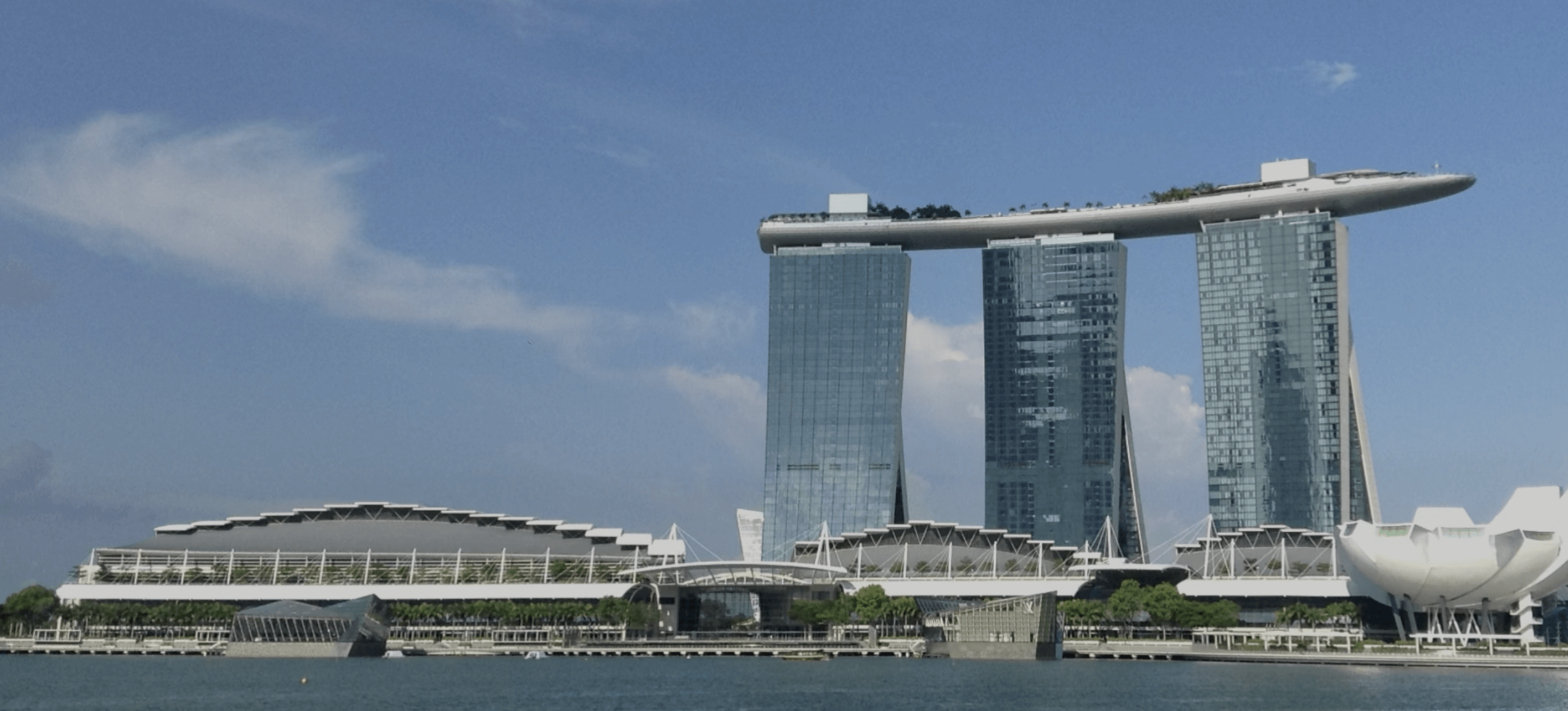
Singapore is divided into 28 postal districts. When selecting property, attention is often focused on specific districts. The "wealthy" areas traditionally refer to the prime central Districts 9, 10, and 11, while the "beach" area typically denotes the East Coast's District 15. These are among the most popular investment locations. Key areas in Singapore include District 1 (Marina Bay), District 2 (Central Business District), District 4 (Sentosa), District 6 (City Hall), District 9 (Orchard Road), District 10 (Tanglin), District 11 (Newton), and District 15 (East Coast).Singapore can be conceptually divided into three rings, with the first and second rings constituting the Central Region, and the rest forming the third ring.【Core Central Region (CCR) - First Ring】:Districts 1, 2, 6, 9, 10, and 11 form the first ring. Among these, Districts 1, 2, and 6 comprise the Central Business District (CBD), a financial hub home to numerous Fortune 500 companies. Districts 9, 10, and 11 are traditionally upscale residential areas. District 9 boasts the world-renowned Orchard Road shopping belt. District 10 offers landed properties and prestigious schools in the conveniently located Bukit Timah area, attracting figures like Jet Li, Vicki Zhao, and the founders of Haidilao, Dyson, and Alibaba. District 11 serves as a medical hub for Southeast Asia, featuring advanced medical facilities and highly professional healthcare teams.【Rest of Central Region (RCR) - Second Ring】:Districts 3, 4, 5, 14, 15, and 20 belong to the second ring, known for good value and generally around 30 minutes by public transport to the city centre. Each area has its unique character: District 5 (Clementi) is home to the top-ranked National University of Singapore (NUS); District 20 (Bishan) is near Singapore's largest MacRitchie Reservoir; District 14 (Geylang) is a paradise for food and entertainment; and District 15 (East Coast), with its beautiful coastline, park connectors, and culinary scene, is one of the most favoured investment areas alongside Districts 9, 10, and 11.【Outside Central Region (OCR) - Third Ring】:The third ring encompasses the eastern, western, northern, and north-eastern parts of Singapore. Housing & Development Board (HDB) Flats are more prevalent here. Each region has a regional centre: Tampines in the East, Jurong in the West, Woodlands in the North, and Seletar in the North-East. These regional centres are well-equipped with amenities to serve residents' daily needs, and the government is creating more job opportunities there to decentralize employment from the CBD, saving residents commuting time and costs.Singapore's Allure:Singapore is a vibrant metropolis offering diverse entertainment options, including integrated resorts like Marina Bay Sands and Resorts World Sentosa. Its tax system is fair and robust, featuring no tax on overseas income, no capital gains tax, no inheritance tax, relatively low personal income tax rates, and a consistent 17% corporate tax rate. As a key global transportation hub with a world-class airport and seaport, Singapore serves as a gateway to the world. Excellent infrastructure and widespread broadband internet coverage extend across the entire island.Low mortgage interest rates from Singaporean banks attract cash-rich investors to seize opportunities in the property market. Singapore boasts a rich, multicultural society and an extremely low crime rate, fostering a harmonious and inclusive environment.Advantages of Investing in Singapore Property:No capital gains tax, no inheritance tax;No restrictions on foreign purchases;Strong and stable currency;Properties sold based on net usable area;Foreigners can obtain loans up to 70% (subject to eligibility);Mortgage interest rates below 2.5% per annum;Rental yield of 3-4%;Active resale market;Laws and regulations protecting homebuyer rights;Legally mandated progressive payment scheme tied to construction stages;Singapore's ongoing development supports property value appreciation。Property Types in Singapore:While administratively divided into 28 districts, the property market is commonly categorized into three main regions for valuation purposes: Core Central Region (CCR), Rest of Central Region (RCR), and Outside Central Region (OCR), with prices generally descending from CCR to OCR.Singapore's housing types are clearly defined:Public Housing (Affordable Housing):Nearly 80% of Singapore's population lives in HDB flats built by the Housing & Development Board or Executive Condominiums (ECs). As of June 2020, the median HDB resale price was S$495,000. Strict eligibility conditions regarding buyer income, citizenship status, and subsequent sale/rental apply. HDB flats have stricter rules and lower prices. ECs are generally priced over 70% lower than comparable private condominiums but are not available for purchase by families without at least one Singapore Permanent Resident or Citizen member.Private Residential Properties (Non-Landed):These properties have no purchase eligibility restrictions and are the primary focus for overseas buyers. They are categorized based on development scale and facilities. Developments with a land area exceeding 4,000 sqm and at least 60% dedicated to common facilities are termed 'Condominiums'; others are 'Apartments'. Condominiums typically feature amenities like security, car parks, swimming pools, gyms, function rooms, BBQ pits, and spas, often representing higher-end housing. The median price for private non-landed homes was S$1.468 million in June 2020. Rough price ranges per square foot are approximately S$1,000 - S$2,000 psf in OCR, S$2,000 - S$4,000 psf in RCR, and often exceeding S$4,000 psf in CCR. Landed Properties:Equivalent to villas, categorized by size: Good Class Bungalows (>1,400 sqm), Bungalows (>400 sqm), Semi-Detached Houses (>200 sqm), and Terrace Houses (80-200 sqm). The median price for landed homes was S$3.85 million in June 2020. Unlike apartments, landed properties offer more space and landowners hold the title to the land, which is advantageous for inter-generational wealth transfer.Real Estate Agent Practices:a) Dual Agency Prohibition: To avoid conflicts of interest, Singapore regulations generally prohibit a single agent from representing both the buyer and seller in the same transaction. Most transactions involve separate buyer's and seller's agents, each advocating for their client's interests during negotiations.b) Transparent Rules: Buyers do not pay commission fees for either new or resale properties. Coupled with transparent pricing, this minimizes risks of price inflation or hidden fees when engaging an agent.c) Regulated Profession: All real estate agents must pass a stringent government-administered exam by the Council for Estate Agencies (CEA) and be registered. The pass rate is typically low (10-15%). Unregistered individuals cannot legally conduct property transactions. Investors can verify an agent's registration status for free on the CEA website: www.cea.gov.sg.

Market Data
1. Prices Continue Rising, with Growth Moderating and Stabilizing According to URA Q2 2025 data, private residential property prices increased by 1.0% quarter-on-quarter, while non-landed private home prices rose by 0.7%. The Core Central Region (CCR) saw a higher increase of 3.0%.In Q1 2025, the private residential property price index rose by 3.33% year-on-year (up 0.81% quarter-on-quarter).Statistics from GlobalPropertyGuide indicate that nominal house prices increased by approximately 3.92% for the full year 2024, and by about 2.47% after inflation adjustment.2. Fluctuating Transaction Volumes and Tightening New Home Supply:In Q2 2025, the total transaction volume for private residential properties decreased by approximately 29.4% quarter-on-quarter to 5,128 units. Among these, new home sales (excluding ECs) plummeted by 64.1% quarter-on-quarter to 1,212 units.Cumulative new home sales for the first half of the year reached 4,587 units, a significant increase of 142.8% compared to the first half of 2024.Developers launched only 1,520 new units in Q2, significantly fewer than the previous quarter.External forecasts predict full-year new home sales for 2025 will be in the range of 7,000–8,500 units.3. Policy Controls Remain Stringent:To prevent market overheating, the Singapore government has maintained policy tools such as the Additional Buyer's Stamp Duty (ABSD), loan quotas, and Loan-to-Value (LTV) limits.During periods of high price pressure, the government has repeatedly tightened measures. Even during recent market warming phases, policy intervention has not been relaxed.

Rental Returns
Following a rental decline in 2013 due to a substantial increase in new private housing completions, the island-wide private residential rental market remained subdued for an extended period. In 2018, government measures to cool the property market, including increased stamp duties, raised purchase costs, leading some potential buyers to turn to renting, which subsequently revitalized the rental market. The market experienced a minor dip in early 2020 due to the short-term impact of COVID-19 but began recovering from June 2020 onwards. Significant rental growth occurred during 2021–2022, driven by low-interest rates and demand for better living spaces. This was followed by a correction in 2023–2024 (rents declined cumulatively by about 1.9% over 2024). However, the rental market showed clear signs of stabilization and recovery in the first half of 2025 (Q1 +0.4%, Q2 +0.8%, H1 cumulative +1.2%). The Core Central Region (CCR), due to its higher absolute rental levels, typically corresponds to lower gross rental yields. Rental trends vary across different regions and property types. Overall, tight supply (controlled completions and new project launches) continues to support rents, although short-term fluctuations in transactions and vacancy rates have led to a moderation in rental growth, characterized by alternating phases of correction and recovery.

Investment Prospects
Singapore maintains stringent controls on housing prices, and historical results prove these government measures exceptionally effective. However, historical market trends also demonstrate robust underlying demand for Singapore property. Its favorable tax environment attracts numerous companies, while sound legal and social welfare systems ensure a high standard of living for residents. Consequently, even though government controls may suppress price surges, the overall health and risk resilience of Singapore's property market are considered world-class. Despite high stamp duties for foreign buyers, continued corporate expansion ensures that desirable properties will remain sought-after.

Popular City Recommendations
Singapore does not have the concept of separate cities, and thus no official capital. Due to its small total land area of approximately 728 square kilometers, the nation is divided into five administrative districts for governance. From west to east, these are: the South West Region, North West Region, Central Region, North East Region, and South East Region.

Home Buying Guide

Purchasing Strategy
Buying property in Singapore differs significantly from buying in China. Firstly, regarding tenure, unlike the various property rights systems in China, Singapore properties typically have leaseholds of 99 years, 999 years, or Freehold tenure. Generally, longer tenure increases the property's value and price, which is why 99-year leasehold properties are most common for investment-oriented private residential purchases.Secondly, in terms of area measurement, Singapore uses square feet as the unit (100 sqm ≈ 1076 sq ft). Crucially, Singapore does not have the concept of "shared area" or "efficiency ratio." The built-up area is essentially equivalent to the usable area. Therefore, a property labelled 100 sqm in Singapore would typically feel more spacious than its nominal equivalent in China. Furthermore, all properties are handed over with standard finishing (fully furnished for immediate occupancy).Regarding payments, Singapore has safer and more robust regulations. The typical downpayment is 20%, with subsequent payments staged according to construction progress. Crucially, payments are held in project accounts supervised by the government. Developers only receive the final portions of the payment (typically up to 85%) when buyers receive their keys and take possession. The remaining balance is released only after all defects are rectified. This system effectively prevents abandoned or unfinished projects ("rotten-tail buildings").Finally, a key concern for many Chinese buyers is the school district. In Singapore, school admission priorities are based firstly on citizenship status (Citizens > Permanent Residents > Foreigners), and secondly on proximity of the home to the school. Living closer can increase the chances of admission but is not an absolute guarantee. Nonetheless, parents with specific school preferences often still try to purchase property as close to their desired school as possible.


Purchase Costs
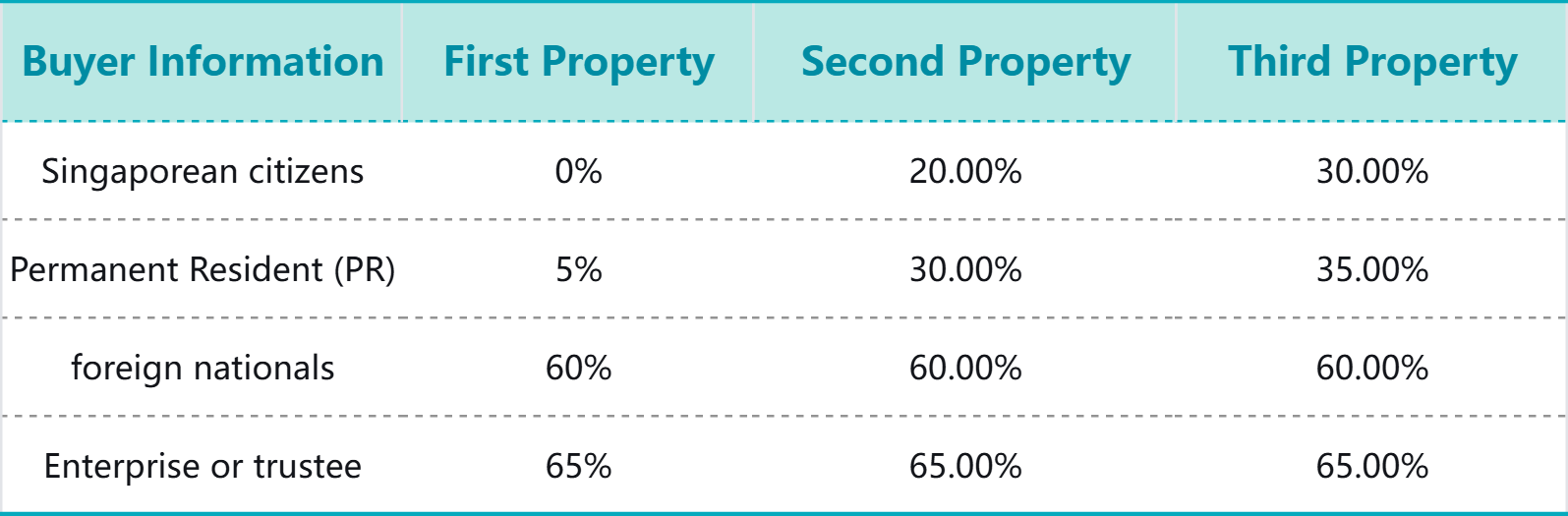
Singapore's stamp duties primarily consist of three types: Buyer's Stamp Duty (BSD), Seller's Stamp Duty (SSD), and Additional Buyer's Stamp Duty (ABSD).Buyer's Stamp Duty (BSD).BSD is calculated based on the purchase price or market value of the property, whichever is higher.Prior to Feb 20, 2018, the top BSD rate was 3%. From Feb 20, 2018, different rates applied to residential and non-residential properties. For residential properties bought between Feb 20, 2018, and Feb 14, 2023, the top BSD rate was 4%. Effective Feb 15, 2023, the top marginal rate for residential properties is 6%, and for non-residential properties, it's 5%. Additional Buyer's Stamp Duty (ABSD):Effective Dec 8, 2011, purchases of residential property (including residential land) are subject to ABSD on top of BSD. ABSD is calculated on the higher of the purchase price or market value. Rates effective from April 27, 2023, are as follows:60%: Foreigners purchasing any residential property.65%: Entities purchasing any residential property.35%: Housing developers purchasing any residential property (subject to conditions).5%: Singapore Permanent Residents (SPRs) purchasing their first residential property.30%: SPRs purchasing their second residential property.35%: SPRs purchasing their third and subsequent residential properties.20%: Singapore Citizens (SCs) purchasing their second residential property.30%: SCs purchasing their third and subsequent residential properties.The main components of holding costs are Maintenance Fees (for condos/apartments) and Property Tax.Typically, within the same residential project, more units mean lower maintenance fees per household due to shared costs. However, larger unit sizes and projects with more/better facilities or higher-quality services naturally command higher maintenance fees, which can vary significantly between projects.Property Tax was revised effective Jan 1, 2015, with different tax structures for owner-occupied, rented-out, and non-residential properties. The formula is: Property Tax = Annual Value (AV) x Tax Rate.The Annual Value (AV) is an estimated gross annual rent of the property, less deductions for furniture, furnishings, and maintenance. It can be roughly estimated as about 70% of the potential annual market rent. Tax rates are progressive, meaning different portions of the AV are taxed at increasing rates. The final tax payable is the sum of these portions.Owner-occupied residential properties: Tax rates range from 0% to 16%.Non-owner-occupied residential properties (e.g., rented out): Tax rates range from 10% to 20% (effective from Jan 1, 2024).The government assesses the AV based on market rental levels. This value is assigned regardless of whether the property is actually rented out. Most mass-market properties (including HDB flats) have an AV below S$30,000, often resulting in little to no property tax for owner-occupiers below this threshold. Rates increase progressively for AV above S$30,000.Seller's Stamp Duty (SSD):SSD primarily applies to properties disposed of within 4 years of purchase.Held for 1 year or less: 12%;Held for more than 1 year and up to 2 years: 8%;Held for more than 2 years and up to 3 years: 4%;Held for more than 3 years and up to 4 years: 4%;Held for more than 4 years: 0%


Loan Process
When purchasing private residential property, foreigners can generally access the same interest rates and loan amounts as local residents, provided they submit the required documents to the bank/financial institution. As of data from August 2021, depending on the borrower's profile, the Loan-to-Value (LTV) ratio for foreign buyers typically ranges from 50% to 80%. Interest rates, often fixed for 0-3 years, were around 1% - 2% at that time. Banks offer various loan products, such as loans for HDB flats, loans for large properties over S$1 million, loans for private condominiums, loans for under-construction properties (progress payment loans), and refinancing options. Buyers can choose based on their specific property type and situation.
Disclaimer: All country-related information provided above is sourced from the internet and is for reference only. Should there be any discrepancies with actual circumstances, please rely on the factual situation. If you identify any inaccuracies, please contact us promptly for corrections.
高宁泽
English
中文
Phone Number:18540342898

Contact

Online Consultation


