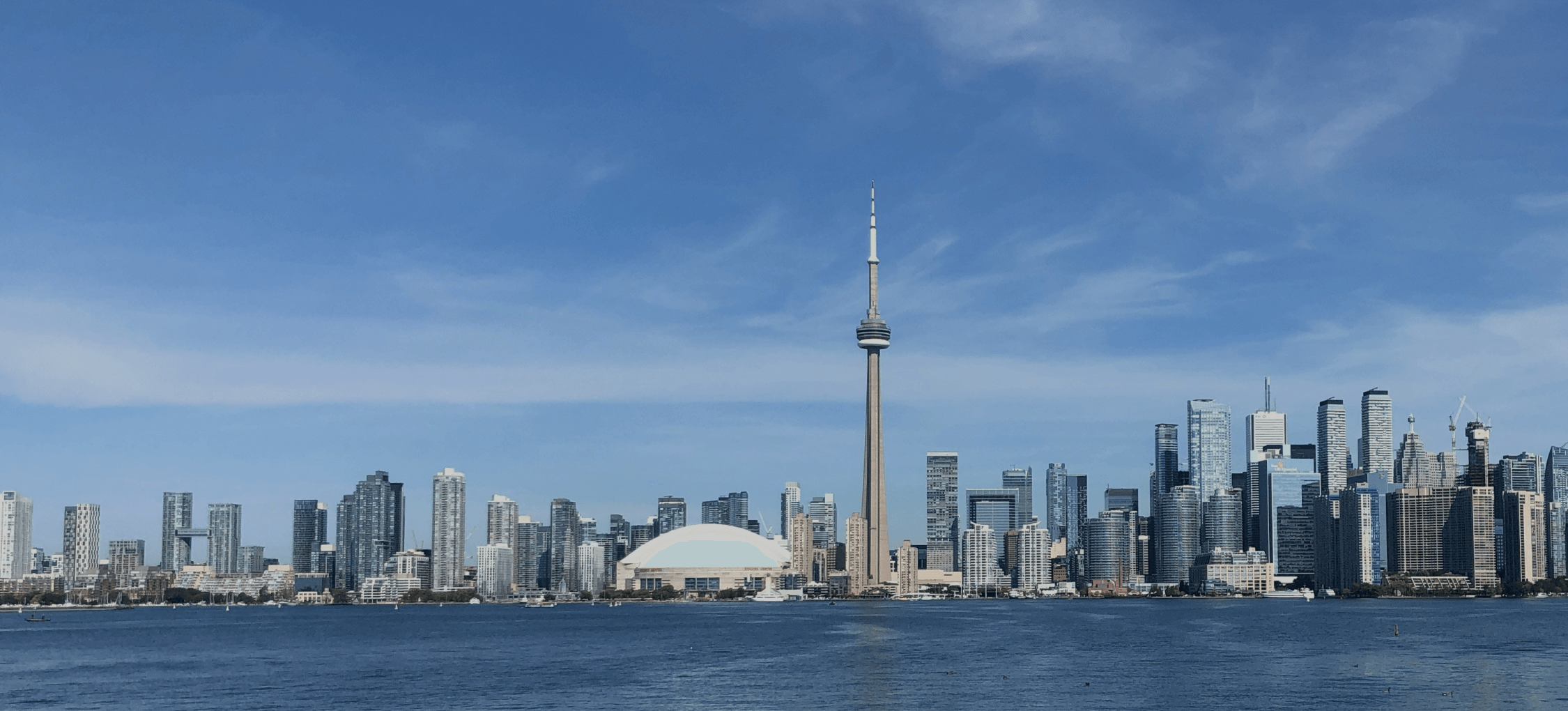
Canada is renowned for its relatively open immigration policies, well-developed social welfare and education systems, and high quality of living. As the world's ninth-largest economy, Canada maintains long-term stability and efficient operation across economic, political, and financial sectors, with ample fiscal capacity and stable, predictable investment returns. Furthermore, the effective corporate income tax burden in Canada is among the lowest in developed countries, presenting significant appeal to foreign investors.

Geographical Location
Canada is located in the northern part of North America, bordered by the Atlantic Ocean to the east, the Pacific Ocean to the west, the US state of Alaska to the northwest, and the contiguous United States to the south. Its northern reaches face the Arctic Ocean, with parts of its territory extending into the Arctic Circle. With a land area of 9.98 million square kilometers, it ranks second in the world, behind only Russia. The capital is Ottawa. The country comprises ten provinces and three territories, with major cities including Vancouver, Toronto, and Montreal.Compared to China, Canada has a much larger land area but lies at a generally higher latitude. Its climate is predominantly subarctic continental and humid continental, while its northern regions experience an arctic climate.

Demographics
According to Worldometer data from 2025, Canada's total population has reached 40,126,723, ranking 38th globally. Due to the high latitude, approximately 80% of the population is concentrated in the southern part of the country, within 150 kilometers of the Canada-United States border. The national population is primarily distributed within the metropolitan areas of Toronto in Ontario, Montreal in Quebec, and Vancouver in British Columbia.Regarding ethnic composition, according to the 2021 census, there are approximately 1.72 million Chinese Canadians, accounting for 4.7% of the total population, primarily concentrated in Vancouver and Toronto.
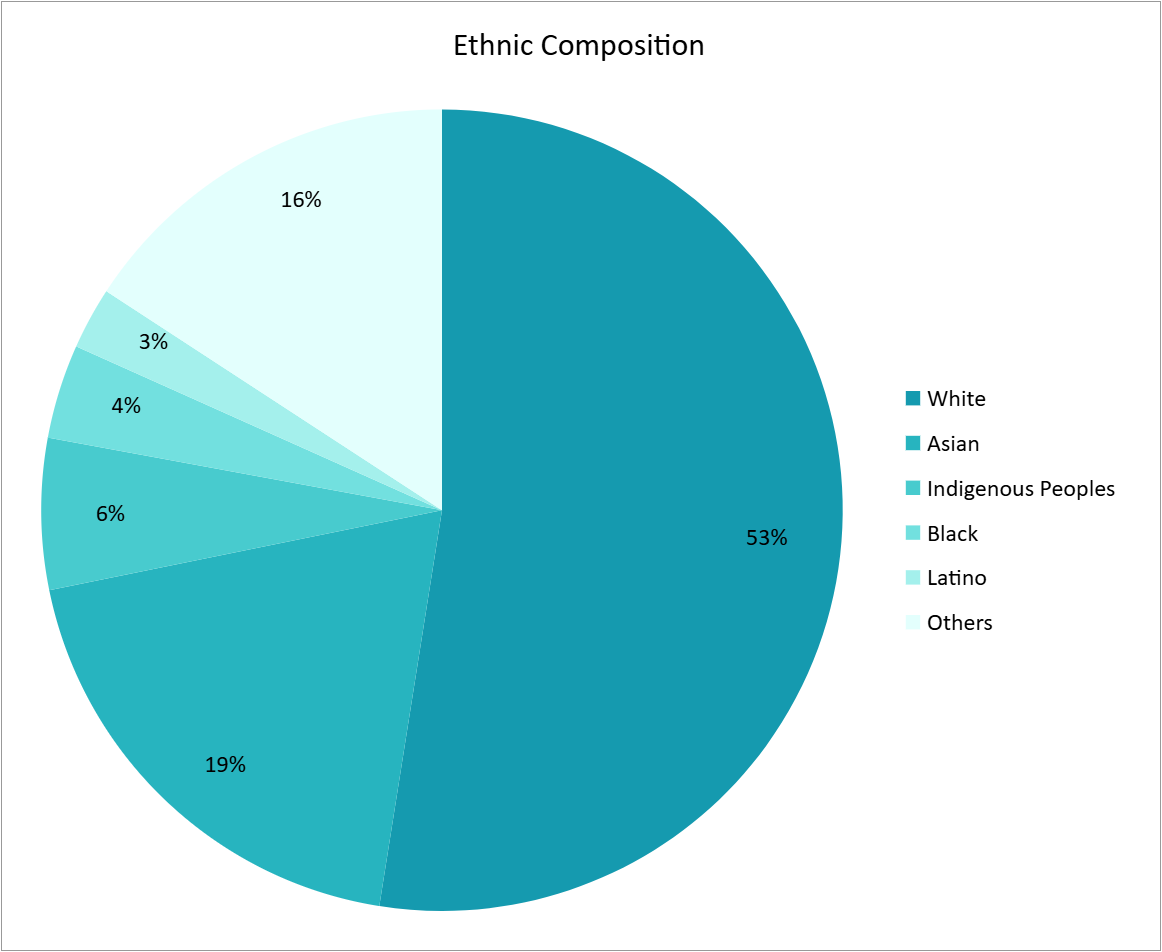
2021 census data indicates that European Canadians constitute 52.5% of the population, primarily including those of English, French, Scottish, Irish, and German descent. Asians account for 19.3%, among whom the Chinese ethnic origin is the largest subgroup at 4.7% (approximately 1.72 million people). Other groups include Indigenous peoples (6.1%), Black Canadians (3.8%), Latin Americans (2.5%), among others. The proportion of the visible minority population is steadily increasing. Statistics Canada predicts that by 2031, visible minorities will comprise one-third of the national population, resulting in a diversity landscape similar to that of the present-day United States.
Canada has two official languages: English and French. Approximately 59.7% of residents report English as their mother tongue, while 21.4% report French. Nationally, 11 first language categories are reported, subdivided into over 65 distinct languages and dialects.As of 2021, approximately 8.2 million residents reported a mother tongue that was neither English nor French. Common non-official languages include Mandarin and Cantonese (collectively ~1.68 million people), Punjabi (~763,000), Spanish (~554,000), German (~622,000), and Italian (~284,000).
The Canadian Constitution guarantees freedom of religion and cultural diversity. According to the 2016 census, 53.3% of residents identified as Christian. Catholics formed the largest single denomination at 29.9% of the population. Among Protestant groups, the United Church of Canada accounted for 3.3%, the Anglican Church for 3.0%, and Baptist groups for 1.2%. Approximately 34.6% of residents reported no religious affiliation. Other major religions include Islam (4.9%), Hinduism (2.3%), Sikhism (2.1%), Buddhism (1.0%), and Judaism (0.9%).

Time Zones
Canada spans six time zones: Pacific Standard Time (PST), Mountain Standard Time (MST), Central Standard Time (CST), Eastern Standard Time (EST), Atlantic Standard Time (AST), and Newfoundland Standard Time (NST). The time difference from Beijing Time is 16, 15, 14, 13, 12, and 11.5 hours respectively. Daylight Saving Time is observed from the second Sunday in March to the first Sunday in November, during which clocks are set forward by one hour. Standard Time is in effect for the rest of the year.For example: In Vancouver (PST), if it is 10:00 AM on May 1st during Daylight Saving Time, you add (16-1) hours to get the Beijing Time, which would be 1:00 AM on May 2nd. In Toronto (EST), if it is 10:00 AM on December 1st during Standard Time, the corresponding Beijing Time would be 11:00 PM on the same day.

China-Canada Flights
Currently, there are four direct flight destinations in Canada: Vancouver, Toronto, Montreal, and Calgary. In mainland China, 13 cities offer direct flights to Canada, including Beijing, Shanghai, Guangzhou, Chengdu, Shenyang, Xiamen, Zhengzhou, Kunming, Nanjing, Hangzhou, Qingdao, Chongqing, and Tianjin.Among these, the routes between Beijing/Shanghai and Vancouver/Toronto are the most frequent, with the possibility of daily flights. The flight duration is approximately 10-14 hours. Fares are significantly influenced by the season: economy class tickets typically range from RMB 3,500 to 4,500 during the off-peak season, but often exceed RMB 10,000 during the peak season.

Economic Indicators
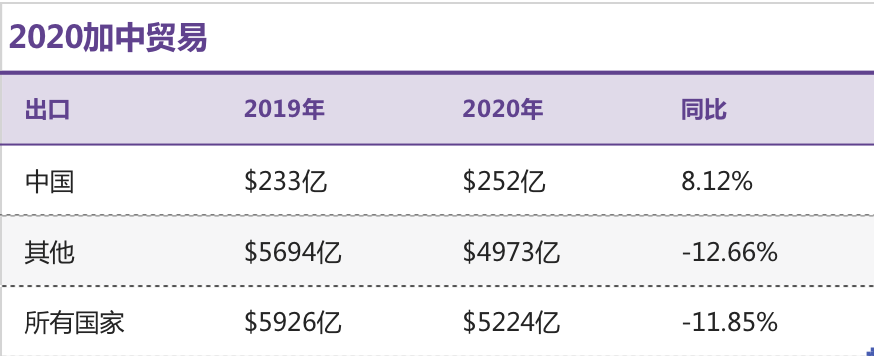
According to World Bank data, Canada's total GDP reached $2.24 trillion USD in 2025, a year-on-year increase of 1.5%, ranking it 9th globally. The annual per capita disposable income was approximately $53,558 USD, ranking 22nd worldwide. Regarding the unemployment rate, it surged to 9.5% in 2020 due to the impact of the pandemic, but has gradually declined to 7% in 2025—slightly higher than the 5.6% recorded in 2019. Inflation remains around 2.4%, with an average annual rate of approximately 2.5% over the past decade, which is slightly higher than that of most developed economies.In terms of trade, China-Canada relations are becoming increasingly close. Although total Canadian exports decreased by 11.85% year-on-year in 2020 due to the global pandemic, exports to China bucked the trend and grew by 8.12%, accounting for 4.8% of total exports. Imports also showed resilience, with the value of imports from China increasing by 1.91% year-on-year. This indicates that the potential for trade between China and Canada remains strong, with broad prospects for future cooperation.

Primary Education
Canada's basic education system is divided into preschool, elementary school, and secondary school, with elementary and secondary education being compulsory. As Canada does not have a single federal education department, specific arrangements are independently managed by provincial governments, though the overall structure is largely similar.Kindergarten typically starts at ages 4-5, lasting 1-2 years. It is mandatory only in New Brunswick and Nova Scotia, and voluntary in other provinces. Elementary school generally begins at ages 6-7, spans 6 years from Grade 1 to Grade 6, with most subjects often taught by a single teacher.Secondary education is divided into middle school and high school. Middle school lasts only two years (Grades 7-8), primarily helping students adapt to different teachers and subjects, and preparing them for more intensive subsequent studies. High school spans 4 years, with slight variations by province: most provinces require students to graduate at age 16 or 18. Canadian law requires students to stay in school at least until age 16, while Ontario and New Brunswick require students to remain until age 18 or until they obtain a high school diploma. Students in Quebec complete up to Grade 11, after which they enter a two-year CEGEP (Collège d'enseignement général et professionnel, College of General and Vocational Education)program to explore academic or vocational paths early, preparing for university choices.Besides public schools, parents can choose private or religious schools. Private schools charge high tuition but offer more flexible curricula; religious schools incorporate religious education alongside the standard curriculum. Canada also employs a school catchment area system, where residence determines eligibility for specific public schools; applying outside one's zone requires a special process. International students require a study permit and a letter of acceptance to enroll.Compared to China's nine-year compulsory education, Canada provides twelve years of compulsory schooling. The curriculum places greater emphasis on discussion, debate, and personal development, focusing on cultivating critical thinking skills and personal interests, with relatively lighter academic pressure.

Higher Education
In the QS World University Rankings 2025, Canada has three universities within the top 100: the University of Toronto (25th), McGill University (29th), and the University of British Columbia (38th), located in Toronto, Montreal, and Vancouver respectively.Apart from these three, the top ten universities in Canada's domestic rankings include:4th: McMaster University (Hamilton);Tied 4th: University of Alberta (Edmonton);6th: Université de Montréal (Montreal);7th: University of Waterloo (Waterloo);8th: University of Ottawa (Ottawa);9th: Western University (London);Tied 9th: University of Calgary (Calgary)。Canada's top universities are relatively dispersed geographically, unlike some countries where they are concentrated in major cities, leading to a more balanced distribution of educational resources across the nation. Compared to China, Canada has slightly fewer universities in the global top 100 (China has 5 universities in the top 100), but the general application difficulty is lower than that for top Chinese institutions like Tsinghua University and Peking University. Except for a few highly competitive programs, the admission pressure is relatively moderate.Similar to most overseas universities, Canadian institutions generally follow an "easy admission, strict graduation" model—relatively easier to enter but with rigorous graduation standards. The most significant academic challenges for students are often concentrated during the university years.
According to the Canadian Constitution, healthcare is primarily a provincial responsibility. The public health insurance system is known as "Medicare." Medicare covers approximately 70% of healthcare needs; the remainder, such as prescription drugs, dental, and vision care, are typically paid out-of-pocket. Approximately 65-70% of Canadians have supplementary private insurance to cover gaps in Medicare, often provided by employers, while some vulnerable groups receive coverage through social assistance programs.In 2024, Canada's total health expenditure is projected to reach $372 billion CAD (approximately $9,054 CAD per capita), accounting for 12.4% of GDP, a record high. According to a 2024 report by the Fraser Institute, among 31 high-income countries with universal health coverage, Canada ranks sixth in health expenditure as a percentage of GDP. Despite the high level of investment, challenges remain in areas such as infant mortality rates, chronic disease management, wait times for medical services, and coverage for prescription drugs and dental care.
Canada is often called the "Land of Ten Thousand Taxes" due to its high levels of personal income tax and consumption taxes for resident individuals. However, its tax system does not include a formal inheritance tax. Canada employs a three-tiered taxation system involving federal, provincial (or territorial), and municipal governments. The fiscal year runs from April 1 to March 31 of the following year.Unlike the United States, Canada allows eligible citizens or permanent residents to become non-resident taxpayers while working abroad. Non-residents are generally only taxed on income sourced from Canada. It is important to note that while there is no inheritance tax, a deceased individual's assets may be deemed disposed of immediately before death, potentially triggering capital gains tax.Canada has active Avoidance of Double Taxation Agreements with 84 countries worldwide. A non-resident individual who stays in Canada for 183 days or more in a calendar year is generally deemed a tax resident for the entire year and is subject to tax on worldwide income using a differential tax rate, with provisions to prevent double taxation.Major Tax Types:Income Tax:Canadian citizens, permanent residents, or individuals working or conducting business in Canada must pay income tax to both the federal and provincial governments. Tax residents are required to report their worldwide income. If they hold specified foreign property with a total cost of more than CAD $100,000, they must also file Form T1135. The tax filing deadline is typically April 30th each year. Self-employed individuals can file by June 15th, but any balance owing is still due by April 30th.Federal Income Tax Rates (Example Brackets for 2025):Provincial Income Tax: In 2025, the federal government implemented a middle-class tax cut, reducing the lowest marginal tax rate from 15% to 14%, effective July 1, 2025. Canada's personal income tax system is progressive, with rates and income brackets varying by province. Provincial lowest rates are typically around 5%, increasing with income, with top rates for high-income earners often exceeding 20%. Individuals must pay income tax to both the federal government and their province of residence. Taxable income includes salary, interest, pension benefits, and relief payments, with the tax rate increasing stepwise with income levels.Capital Gains Tax:This is a tax levied on the profit from the sale of capital property. In 2025, Canada maintains the Lifetime Capital Gains Exemption (LCGE), applicable to qualified small business corporation shares, and qualified farm or fishing property. For gains on the sale of other capital property, 50% of the capital gain (the "inclusion rate") is taxable. This taxable portion is added to income, and after deducting allowable capital losses, is taxed at the individual's marginal income tax rate.Each family unit is generally allowed to designate one property as its Principal Residence. The capital gain on the sale of a principal residence is usually exempt from tax. If a property was not the principal residence for the entire ownership period, the tax resident can potentially claim the principal residence exemption for up to four extra years under certain conditions (e.g., moving to a new work location). Example: If a purchaser buys a property, rents it out for 5 years, and has no other principal residence during that time, only the capital gain attributable to the years it was actually designated as the principal residence would be exempt. The gain for the other years would be taxable.Social Security Taxes:Almost everyone in Canada with employment or business income must contribute to the Canada Pension Plan (CPP) each year. In 2025, employees with annual earnings over CAD $3,500 contribute 5.95% of their pensionable earnings (up to the maximum), matched by the employer. Self-employed individuals pay both the employee and employer portions, totaling 11.9%. For earnings above CAD $71,300, contributions for the base CPP cease. Additionally, on earnings between CAD $71,300 and CAD $81,200, enhanced CPP contributions apply: employees and employers each contribute 4%, and self-employed individuals contribute 8% for this portion.Consumption Tax:Also known as the Goods and Services Tax (GST), this is automatically applied to most purchases in Canada. The federal GST rate is 5%. Most provinces also levy a Provincial Sales Tax (PST) or participate in the Harmonized Sales Tax (HST), which combines the GST and PST into a single tax.HST Rates (Examples): Ontario 13% (8% PST + 5% GST), Prince Edward Island 15% (10% PST + 5% GST).Alberta and the Northwest Territories have no provincial sales tax, so only the 5% GST applies.Property Tax:Commonly known as land tax, this is levied by municipal governments to fund schools, police, fire services, road maintenance, and other local services. It primarily applies to real estate and sometimes vehicles. Vehicles typically incur a one-time registration fee upon purchase and then an annual license fee (e.g., CAD $137 in Quebec). Property tax for real estate is calculated as a percentage of the assessed value of the property. The specific rate, known as the mill rate, can change annually and varies between municipalities and provinces. For example:Toronto Residential Property Tax Rate: Approximately $0.601087 per $100 of assessed value.Vancouver Residential Property Tax Rate: Approximately $3.11827 per $1,000 of assessed value.Inheritance and Gift Tax:Canada has no formal inheritance tax. When gifting cash to another person, neither the giver nor the receiver pays gift tax. When gifting capital property (e.g., stocks, a house) to another person, the giver is deemed to have disposed of the property at its fair market value. This may trigger a capital gains tax liability for the giver if the property has appreciated in value, or create a capital loss if it has decreased. The receiver generally acquires the property at the fair market value for future tax purposes.
Open Competitive Environment:Canada's real estate industry has a long history, spanning nearly 100 years. It is a relatively open and freely competitive market. The government does not directly intervene to control the real estate market, which overall exhibits a healthy development trend of steady growth.Professional and Standardized Management:Over 100 real estate associations at various levels nationwide oversee the implementation of policies related to the real estate market. All real estate agents must undergo rigorous professional training and pass examinations to obtain a brokerage license before they can practice.MLS System (Multiple Listing Service):Canadian real estate brokerage firms are uniformly integrated into the MLS member federation, managed by the Canadian Real Estate Association. Licensed agents can share listing information through the website, and the general public can also search on MLS, although the information available to them is less detailed than that available to agents.Transaction Security:Property prices in Canada are transparent. During the property transaction process, various third-party institutions assist, including appraisal companies, home inspection companies, notary publics, banks, insurance companies, lawyers, and professional licensed agents. Each institution performs its function to ensure fairness and reasonableness in property transactions.Commission Structure:The seller typically pays the commission for both the listing and buying agents. The total agent commission usually does not exceed 5% of the final sale price and is negotiable. Buyers generally do not need to pay agency fees to their own buyer's agent.Policies for Chinese InvestorsResidential Properties: Effective January 1, 2023, Canada implemented a prohibition on the purchase of residential property by non-Canadians. This ban applies to individuals who are not Canadian citizens or permanent residents.The prohibition was originally set to expire on January 1, 2025, but has been extended until January 1, 2027.The ban applies to all types of residential property, including detached houses, townhouses, and condominiums. It does not apply to residential properties located outside of Census Metropolitan Areas (CMAs) and Census Agglomerations (CAs). Certain exemptions apply, such as for inheritance, divorce, court orders, etc.Commercial Properties: No restrictions.

Market Data
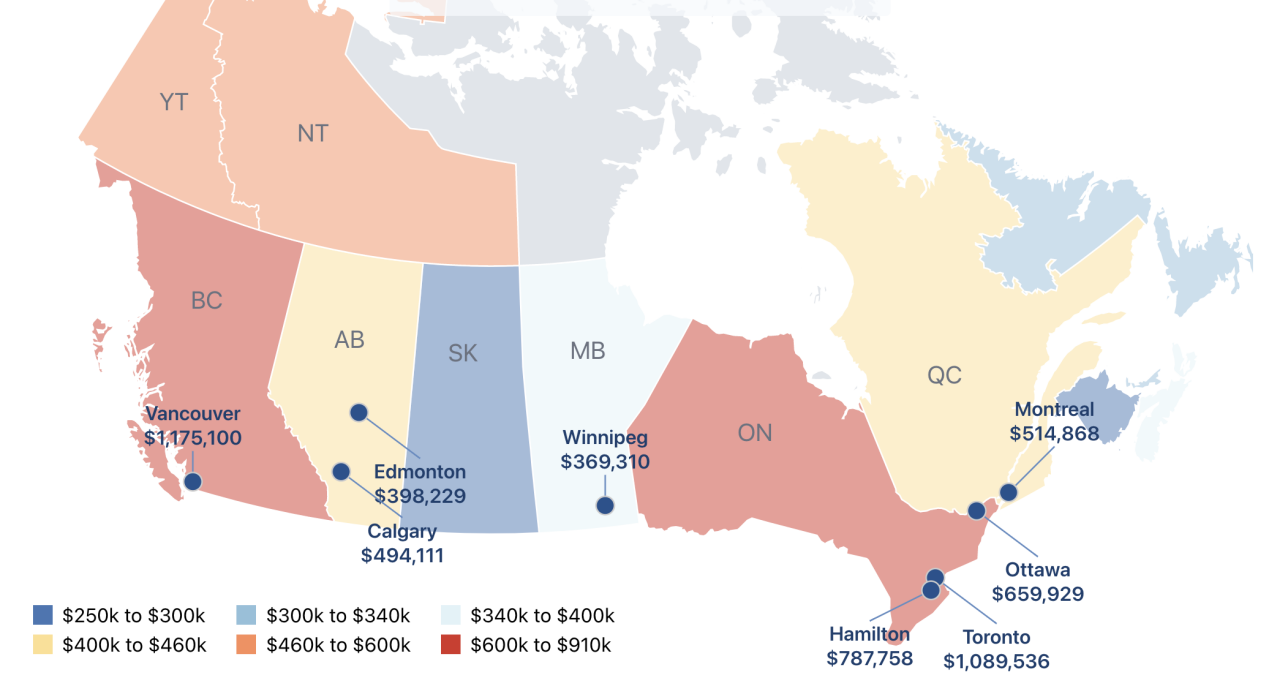
Based on the Canadian Real Estate Association (CREA)'s market report for August 2025:As of August 2025, home sales in Canada increased by 3.8% month-over-month and were up 6.6% year-over-year, marking the best August performance in four years.Key City House Prices:Vancouver:The average home price in Q4 2024 was $1,185,400, reflecting a 5% year-over-year increase.Toronto:The average home price in Q4 2024 was $1,085,900, remaining flat compared to the previous year.As of August 2025, the Canadian real estate market shows a trend of increasing sales and price stability. However, high interest rates and economic uncertainty are constraining income growth for buyers, leading to decreased housing affordability.Charts referenced: Average selling price in Canadian provincial capital cities; Trend chart of Canada's average home selling price from Aug 2019 to June 2021; Trend chart of Canada's average home selling price for the period from August 2019 to June 2021

Rental Returns
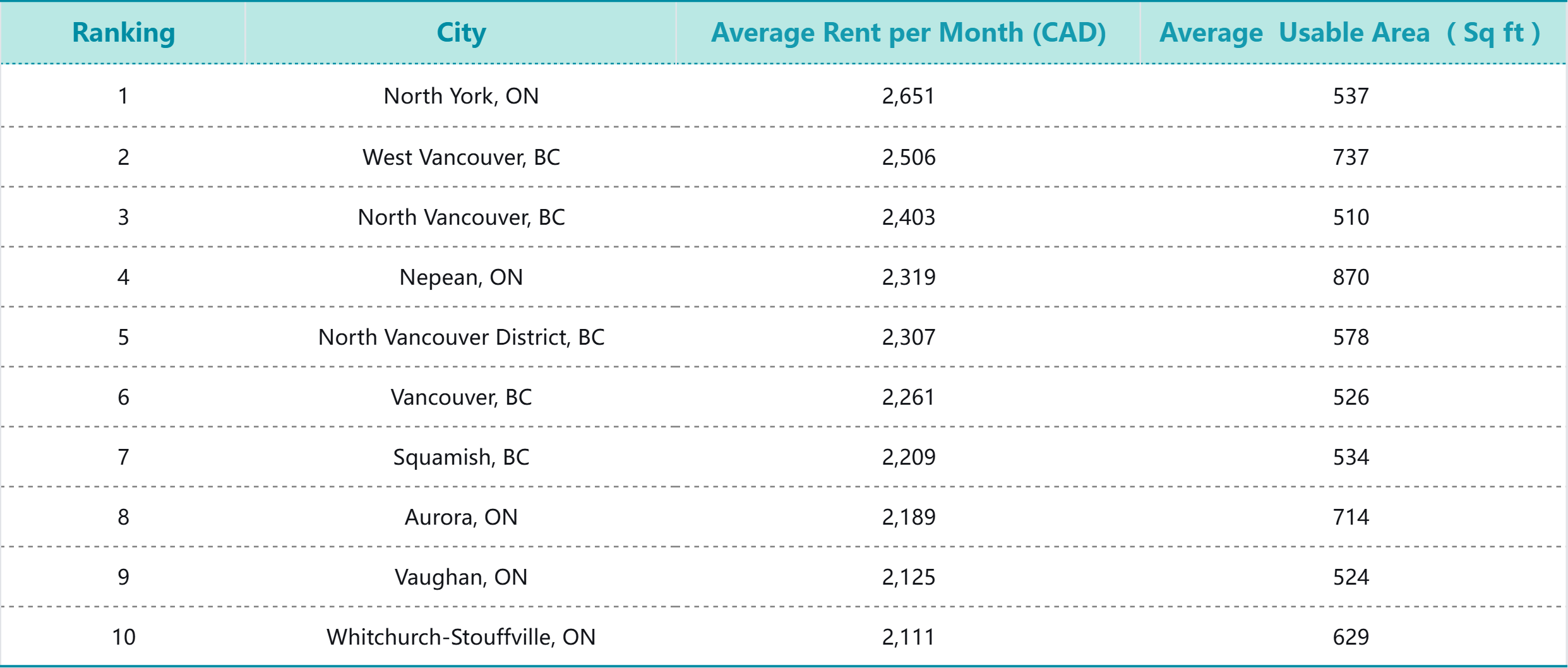
In the first quarter of 2025, Vancouver had the highest average rent for a two-bedroom apartment among Census Metropolitan Areas (CMAs) at $3,170 CAD, followed by Toronto ($2,690 CAD), Victoria ($2,680 CAD), and Ottawa ($2,490 CAD). In contrast, Montreal ranked 17th with an average rent of $1,930 CAD. The smallest CMAs in Quebec had the lowest average rents, including Drummondville ($1,200 CAD) and Sherbrooke ($1,250 CAD).As asking rents faced by potential tenants are typically higher than the average rent paid by long-term tenants – which reflects past lease agreements and may also be subject to rent control regulations – asking rents can better reflect current market trends.

Investment Prospects
Allocation Recommendations:Currently, for individuals with Canadian residency status:Homebuyers for Owner-Occupancy – For those with stable local income, who can manage the current interest rates and down payment requirements, and whose goal is long-term ownership (≥5-10 years), purchasing a home remains a reasonable choice.However, for short-term speculators or highly leveraged investors, factors like moderating rent growth, increasing housing supply, and interest rate uncertainty mean now may not be the optimal time. A more cautious approach is advised, prioritizing thorough local market research and cash flow stress testing.For buyers without local residency status, it is recommended to consult your professional asset allocation advisor for further planning and tailored recommendations based on your specific needs.
Popular City Recommendations
Canada is a country with highly uneven economic development, where major economic activity and population are concentrated in a few large cities like Vancouver, Toronto, and Montreal.Vancouver, with its pleasant climate and appeal as a modern metropolis, attracts people from all over the world. The median apartment price ranges from CAD 800,000 to CAD 850,000, with an average price per square foot of CAD 1,206. Vancouver West is the traditional affluent area, while Burnaby and Richmond are popular among immigrants, have high Chinese populations, and offer relatively more affordable housing.Toronto is a young, vibrant city full of opportunities and challenges. The median apartment price is approximately CAD 580,000 to CAD 620,000, with an average price per square foot ranging from CAD 1,100 to CAD 1,200. Houses in the northern parts are generally newer than those in the south. Many Chinese residents live in areas like North York, Scarborough, and Markham.

Purchase Strategy
Freehold Ownership: In China, land is owned by the state, and residential land lease terms are typically 70 years. In Canada, the vast majority of properties are freehold, meaning the land ownership is private and can be passed down through generations.No Shared Area (No "Gong Tan"): Canadian condominium measurements do not include "shared areas" common in China. Compared to China's 70-80% "usable area ratio," a 100 square meter unit in Canada is roughly equivalent to a 130+ square meter unit in China.

Purchase Costs
1. Foreign Buyer Tax:The Canadian property purchase process is fully handled by a lawyer (including title verification, mortgage checks, sales agreements, and title transfer).2.Land Transfer Tax: Levied on the property price—typically 1% for the portion up to CAD 200,000 and 2% for the amount exceeding CAD 200,000 (rates vary by province).3.GST/HST on New Homes: If purchasing a brand-new home, the Goods and Services Tax/Harmonized Sales Tax (typically 5% GST or applicable HST rate) applies.4.Legal Fees: Approximately CAD 1,000 - CAD 2,000 for handling title transfer, reviewing agreements, etc.5.Home Inspection Fee: Ranges from CAD 300 to CAD 1,000, depending on the property's value and size.6.Property Insurance: Required by lenders if financing. Typically 0.1%-0.2% of the home's value annually. Cost depends on age, condition, location, usage (owner-occupied vs. rental), and coverage. Condos/Townhouses: approx. CAD 150 - CAD 450+ annually; Detached Houses: CAD 1,000 - CAD 8,000+.Property Appraisal Fee: For mortgage purposes, typically CAD 150 - CAD 350.Holding Costs:Property Tax: Municipalities assess property value periodically (e.g., every 1-4 years; Vancouver triennially) and levy an annual tax based on the assessed value. The amount varies significantly by location and property.Condo/Strata Fees: Generally apply to condos and townhouses. Fees are typically $0.42 - $0.60 per square foot per month. Newer buildings often have lower fees. Monthly costs range widely, from approximately CAD 200 to CAD 750+. Detached houses usually have no such fees.Rental Costs (If Renting Out).Property Management Fee: If using a property manager, fees vary based on property type and size, typically ranging from CAD 100 to CAD 400 per month.Income Tax: Rental income is taxable. Net rental income (Gross Rent minus allowable expenses like property tax, strata fees, insurance, repairs, and mortgage interest) is declared annually. It is taxed at the owner's marginal personal income tax rate (Federal + Provincial). Large tax liabilities may require quarterly installment payments.Sale Costs:Realtor Commission: Typically 4% - 5% of the final sale price (shared between listing and buying agents).Legal Fees: For handling the sale transaction.Capital Gains Tax:Investment Property (Non-Principal Residence): Taxable Capital Gain = (Selling Price) - (Purchase Price) - (Eligible Costs like renovations, sales commissions). 50% of the capital gain is included in taxable income and taxed at the individual's marginal income tax rate.Principal Residence: Usually exempt from capital gains tax.


Loan Process
I. Pre-sale / New Construction:Select Property;Sign Contract & Pay Deposit;Choose Mortgage Lender;Formally Apply for Mortgage (approx. 3 months before occupancy/closing);Pay remaining balance (excluding loan amount) and taxes/fees before closing;Final Inspection & Title Transfer.II. Resale Property:View Properties;Select Property & Submit Offer;Seller Accepts Offer;Pay Deposit;Apply for Formal Mortgage;Pay remaining down payment balance and taxes/fees before closing;Property Inspection;Final Settlement & Closing;Occupancy & Title Transfer.III. Mortgage Application Workflow:Mortgage Pre-approval;Property Reservation (Pre-sale) / Offer Acceptance (Resale);Submit Application Documents;Eligibility & Credit Check;Property Appraisal & Inspection;Underwriting & Final Approval / Signing;Funds Disbursement.
All country-related information provided above is sourced from the internet and is for reference only. Should there be any discrepancies with actual circumstances, please rely on the factual situation. If you identify any inaccuracies, please contact us promptly for corrections.