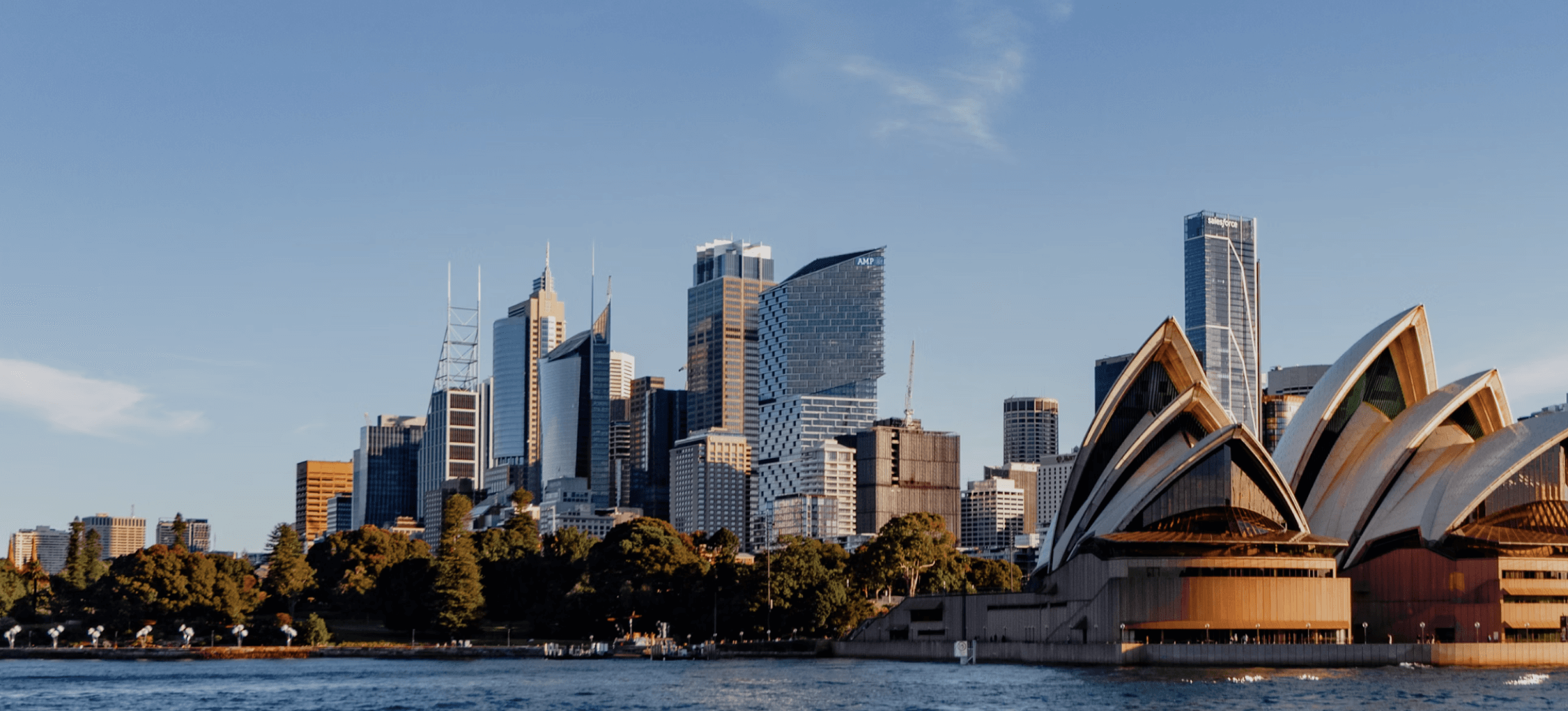
Over the past 40 years, the Australian real estate market has maintained long-term stable growth and has consistently been favored by global investors. Its robust economic and political landscape, combined with comprehensive strengths in tourism, education, immigration, and healthcare, collectively create a unique appeal.However, for most overseas buyers, Australia's greatest charm lies in its lifestyle itself: the warm, comfortable, sunny climate, the rich and diverse cultural atmosphere, and its globally recognized high livability have earned it the reputation as "one of the world's most livable countries." Therefore, whether for investment or pursuing a better quality of life, Australia remains an ideal destination for international buyers.

Geographical Location
The Commonwealth of Australia (commonly abbreviated as AU or AUS) is located in the central Southern Hemisphere and eastern Eastern Hemisphere. It is a country with a parliamentary constitutional monarchy and a federal system. As the largest country in Oceania and the sixth-largest country by land area globally, Australia encompasses the entire Australian mainland, Tasmania, Christmas Island, and several other external territories, with a total area of approximately 7.69 million square kilometers, similar in size to the contiguous United States.It is surrounded by ocean with no land borders; all neighboring countries are across the sea: New Zealand to the southeast; Pacific Island nations like Papua New Guinea, Vanuatu, and Fiji to the northeast; and Southeast Asian nations like Indonesia and East Timor to the north and northwest.
Administrative Divisions
Australia is divided into 6 states and 2 territories: New South Wales, Victoria, Queensland, South Australia, Western Australia, Tasmania, the Northern Territory, and the Australian Capital Territory. The capital is Canberra, the largest city is Sydney, and other major cities include Melbourne, Perth, and Brisbane.As the world's 12th largest economy, Australia is a highly developed capitalist country. It is not only rich in natural resources with developed agriculture and pastoral industries but has also established a comprehensive high-welfare system, allowing residents to enjoy diverse and complete social security. The Australian Dollar (AUD) is its official currency and the fifth most traded currency globally.

Population and Society
Australia is the only country in the world that occupies an entire continent, hence it is often referred to as "the island continent." It is a classic immigrant nation that has long implemented a multicultural policy. The population is highly urbanized, concentrated mainly in southeastern coastal cities, while vast inland areas are sparsely populated. Sydney and Melbourne have been consistently ranked for years among the "world's most livable cities," attracting not only a large number of new immigrants but also serving as the preferred destination for international students, gradually developing the education sector into an important pillar industry for Australia.Compared to China, the division of Australian states roughly corresponds to China's provincial-level administrative units; however, in terms of spatial distribution, its population is highly concentrated along the coast, while the inland areas are dominated by vast natural environments.
Demographics
As of January 2024, Australia's population has exceeded 27 million, slightly higher than the projected resident population of Shanghai in 2025 (approximately 24.8 million).In terms of state distribution, New South Wales has a population of about 7.1 million, Victoria about 5.43 million, Queensland about 4.41 million, Western Australia about 2.24 million, South Australia about 1.85 million, and Tasmania about 570,000.According to the 2021 census data from the Australian Bureau of Statistics (ABS), people of Chinese ancestry account for about 5.5% of the total national population, numbering over 1.39 million, making them one of the largest minority ethnic groups in Australia.
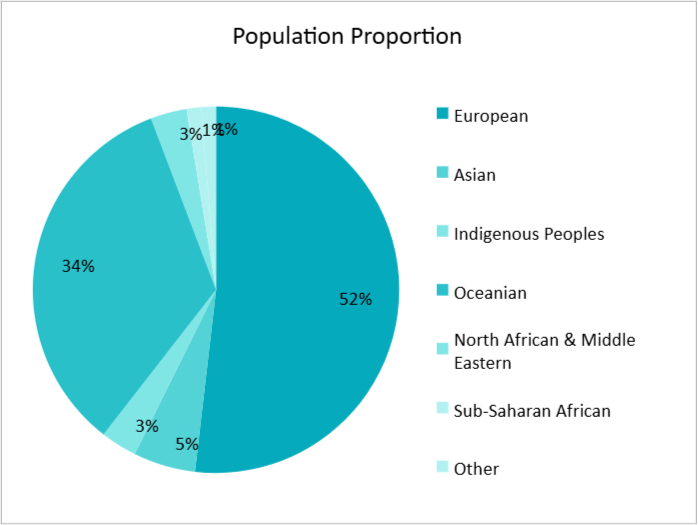
Australia is a typical immigrant nation. According to the 2018 census, about 85.7% of people identified as Australian, most of whom are of European immigrant descent. Specifically, English ancestry accounts for 31.7%, Irish 9.1%, Scottish 7.6%, Italian 4.3%, German 4.1%, East Asian 5.4%, and Greek 1.8%. Among these, the Chinese community is sizable, consistently ranking as the fifth-largest ethnic group in Australia according to 2021 statistics.
English is the official language of Australia, accounting for 72.7% in the 2016 census. Besides English, Mandarin accounts for 2.5%, Arabic 1.4%, Cantonese and Vietnamese each account for 1.2%, Italian accounts for 1.2%, and other languages combined account for nearly 20%. This also reflects the daily imprint of Australia's multiculturalism: on the streets of Sydney and Melbourne, Chinese, Arabic, Greek, and other languages often coexist with English.
In terms of religious belief, Christianity remains the major religious group in Australia, accounting for about 67.3%; followed by those with no religion, accounting for 24.2%; Buddhism 2.7%, Islam 2.4%, Hinduism 1.4%, and other religions such as Judaism, folk religions, etc., combined account for less than 2%. Overall, Australia is a country with a Christian cultural foundation but characterized by religious diversity and coexistence.

Time Zone
Australia spans three time zones, from UTC+8 to UTC+10. Taking Australian Eastern Standard Time (AEST), where Sydney, Melbourne, Brisbane, Cairns, and the Gold Coast are located, as an example, it is 2 hours ahead of Beijing Time. From October to April each year, some regions observe Daylight Saving Time, widening the time difference with Beijing Time to 3 hours.

China-Australia Flights
During non-pandemic times, 17 cities in China have direct flights to Australia.Beijing has direct flights to Sydney and Melbourne.Shanghai has direct flights to Sydney and Melbourne.Guangzhou has direct flights to Brisbane, Melbourne, Perth, and Sydney.Xiamen has direct flights to Sydney and Melbourne.Flight durations are generally between 12 to 14 hours. One-way economy class fares range from approximately RMB 3,000 to 7,000, with higher prices during peak seasons and better value during off-peak seasons.

Economic Level
In 2023, Australia's GDP was approximately US$1.7 trillion, ranking 14th globally. Its per capita GDP was about US$65,000, ranking 19th when calculated by purchasing power parity. The unemployment rate remains around 4.2%. The inflation rate in the first quarter of 2025 was 2.4%, within the Reserve Bank of Australia's target range of 2%-3%, representing the lowest level since 2021, indicating the overall economy's robustness and controllability.
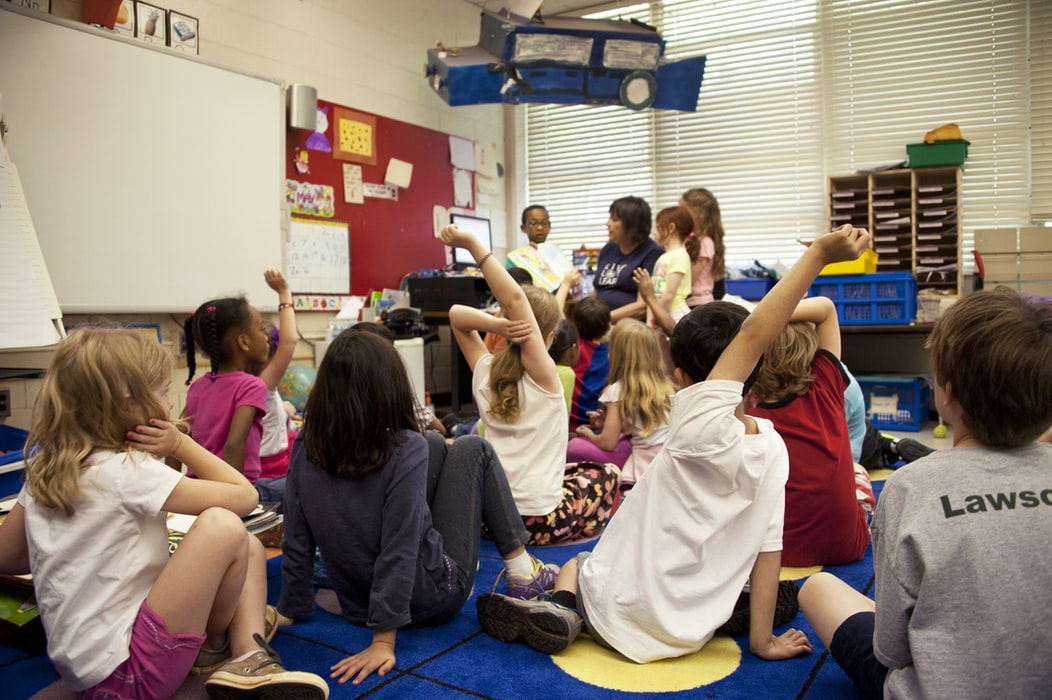
Australia's education system is independently managed by state and territory governments and is broadly divided into three levels: Primary Education, Secondary Education (Junior and Senior High School), and Tertiary Education (Universities and Vocational Education and Training - VET). According to Australian law, education is compulsory until age 15-17 (varies by state). Semester schedules differ slightly between states: primary, secondary, and vocational schools typically run from late January to mid-December, while universities mostly start in late February and end in mid-November.

Primary Education
The compulsory school starting age is determined by state or territory governments, generally starting at 5-6 years old and continuing until 15-17 years old. In recent years, over 75% of students continue studying until age 17. Approximately half of the students attend public schools, while the other half choose Catholic or private schools.Australian citizens and permanent residents can attend public schools for free, while Catholic and private schools require tuition fees. Although Australia does not have a strict "school district housing" system like some countries, if a family wishes to enroll their child in a specific public school, they must reside within that school's designated intake area. Therefore, buying or renting a home is still closely linked to access to quality public school resources.The overall education stages are divided as follows:Primary School: Preparatory/Foundation Year to Year 6 (extended to Year 7 in some states); Secondary School: Years 7 (or 8) to 10;Senior Secondary School: Years 11 to 12.The following table shows the indicative tuition fee standards (in AUD) for international students at various stages in New South Wales, Victoria, and Queensland.

Higher Education
Australia has a total of 42 universities distributed across its six states and two territories. Among these, 37 are public universities, 3 are private universities, and 2 are international university branches. Since the implementation of the 2003 Federal Higher Education Reform Act, Australian higher education institutions have been classified into three categories: Universities, Self-Accrediting Higher Education Institutions, and Non-Self Accrediting Higher Education Providers.As of 2023, Australia has 10 universities within the top 100 of the 2024 QS World University Rankings, 6 universities within the top 100 of the Times Higher Education World University Rankings, and 3 business schools holding the global "Triple Crown" accreditation.The most representative group is the "Group of Eight" (Go8), often regarded as the "Ivy League" of the Southern Hemisphere. Members include: The University of Western Australia, The University of Adelaide, The Australian National University, The University of Sydney, The University of Melbourne, The University of New South Wales, Monash University, and The University of Queensland. This alliance has long maintained a leading position in scientific research, academia, and talent cultivation, having produced dozens of Nobel Laureates, while also wielding extensive influence in politics, business, and various academic fields.Academic System and Tuition Fees:Australian higher education operates on a credit system. Tuition fees are charged based on the number of credits taken and the course type, with postgraduate course fees typically higher than undergraduate fees. Most institutions use a two-semester system (February-June, July-November), and students can shorten their study period by taking summer courses (December-February).Bachelor's Degree: Generally 3 years full-time (typically 24 units/subjects);Professional or Honours Degree: 4 years (typically 32 units/subjects);Master's Degree: Mostly 1.5 to 2 years (typically 12-16 units/subjects).The shorter degree duration also implies that the total study cost can be lower than in some European and American countries.(The following shows the indicative 2019 tuition fees (AUD) for the Go8 universities. Fees are adjusted annually by each institution.)
Australia's healthcare system is centered around the universal public healthcare system, Medicare, combined with community-based general practice, specialist outpatient care, and hospital services, forming a relatively well-structured tiered medical system. Nationally, there are approximately 390 doctors and 1,470 nurses per 100,000 people. On average, each person receives about 13 medical services per year. Healthcare expenditure accounts for over 16% of government financial expenditure, almost double that of China. The national average is about 3.8 hospital beds per 1,000 people (OECD data reference).Community-Based General Practice System:Except for emergencies, residents typically first visit a community clinic for an initial consultation with a General Practitioner (GP). About 40% of doctors in Australia are GPs, handling about 60% of all medical consultations. 97% of residents see a GP at least once a year.Appointments are generally required. If the condition is complex, the GP will issue a referral to direct the patient to a specialist or hospital. Approximately 95% of health issues can be resolved at the community level, and many minor surgeries are also performed directly in clinics, reducing resource waste.Specialist Outpatient System:The GP forwards examination and test results (such as blood tests, ultrasound images) to the specialist. When necessary, patients are also referred to public hospitals for further treatment. Public hospitals prioritize treatment based on the urgency and severity of the condition: critically ill patients are usually scheduled within a week, while those with minor conditions may wait for months.Hospital Service System:Hospitals primarily handle emergencies, severe illnesses, and surgical treatments. Hospitalization usually occurs through two pathways: immediate admission after assessment in the emergency department, or being placed on a waiting list via a referral. If a patient does not meet emergency criteria, the hospital may refuse admission. Residents can obtain timely medical advice through their GP's after-hours services, state-run nurse-on-call hotlines, or the national Healthdirect helpline.In public hospitals, most treatments are covered by Medicare. Private hospitals offer faster appointment scheduling and the freedom to choose doctors but require additional private health insurance or out-of-pocket payment to cover the gap between the cost and the Medicare rebate.
Apart from taxes and fees related to property purchase, the main taxes paid while living in Australia are Individual Income Tax and Company Income Tax.Individual Income Tax :Tax residents are required to declare income under their own name (including salary, rent, sole trader business income, etc.) to the Australian Taxation Office (ATO). The applicable tax rates differ depending on whether the applicant is an Australian tax resident or not. Employers prepay income tax to the ATO based on corresponding tax rates when paying wages. At the end of the financial year, individuals lodge a tax return to reconcile any overpayment or underpayment based on their personal circumstances. The tax rates for residents are as follows :Company Income Tax:Based on the net profit at the end of the financial year, companies need to pay corresponding company income tax to the ATO. The turnover and rate requirements vary slightly by industry. The general rates for the 2024-25 income year are:Base rate entities (with aggregated annual turnover less than $50 million, and 80% or less of assessable income is passive income): 25%;All other companies: 30%;Inheritance Tax:It is important to note that, unlike most countries and regions in the world, Australia has no federal inheritance tax (estate duty). After 1992, all Australian states completely abolished inheritance taxes, making Australia the first wealthy country in the world to abolish inheritance tax. Therefore, strictly from a legal perspective, there is no inheritance tax in Australia. Additionally, there is no gift tax. Liabilities arising from death (e.g., outstanding mortgage) need to be settled from the deceased's estate. If property is transferred to children before death, stamp duty may be payable depending on the state, but if inherited after death, no stamp duty is typically payable.The abolition of inheritance tax in Australia has encouraged entrepreneurial spirit and personal initiative, attracted a large number of foreign immigrants and investors to invest in Australia, and simultaneously stimulated the development of the Australian real estate market.

Tax Deduction
Generally, tax-deductible items can be divided into two main categories: The first category is work-related expenses.First Major Category: Work-Related Expenses;To claim these types of deductions, three strict conditions must be met:You spent the money yourself and were not reimbursed for it.You must prove that the expense is directly related to earning your current employment or business income, not for private use. (For example, if you buy a new mobile phone, you must prove you use it solely for work purposes, not for social media or personal chats, to claim the deduction).You must keep a record of the purchase (e.g., receipt).Second Major Category: Other Work-Related Deductions:Common work-related deductible items include:Home office expenses:Vehicle and travel expenses (Note: Commuting from home to work is generally not deductible);Clothing, laundry, and dry-cleaning expenses for occupation-specific clothing or uniforms (everyday business suits are usually not deductible);Work-related self-education expenses;Other industry-related deductions (e.g., specific tools, union fees);Other work-related items (e.g., professional association fees, subscriptions to specific journals)
The Australian real estate market is highly mature, with high information transparency and relatively sound legal protections. The issue of fake property listings is minimal, which can safeguard the purchasing process for overseas investors.The real estate brokerage industry in Australia is well-developed. The average age of real estate agents in Australia is around 44, and they must pass exams to become licensed. In most regions, agents need to work for more than two years and hold a higher-level license to become directors managing other agents. There are also separate licenses for commercial real estate and property management. Overall, the entry barriers and conditions for becoming a real estate agent in Australia are increasingly high.The biggest difference compared to some other markets (like China's) is that Australian agents typically only receive commission from the seller. Agents use data to identify potential sellers; they have many data tools to help find potential vendors. In Australia, agents generally do not proactively contact buyers but contact sellers. Their first question is usually, "Can I help you assess the value of your house?" This approach is often well-received, and such assessments are usually a free service.As a highly inclusive multicultural immigrant nation, common immigration pathways to Australia include investment migration and skilled migration.For overseas buyers, those aged 18 and over can purchase property, but they are generally restricted to buying new dwellings (off-the-plan or newly built) and cannot purchase established (second-hand) homes, with very limited exceptions.

Market Data
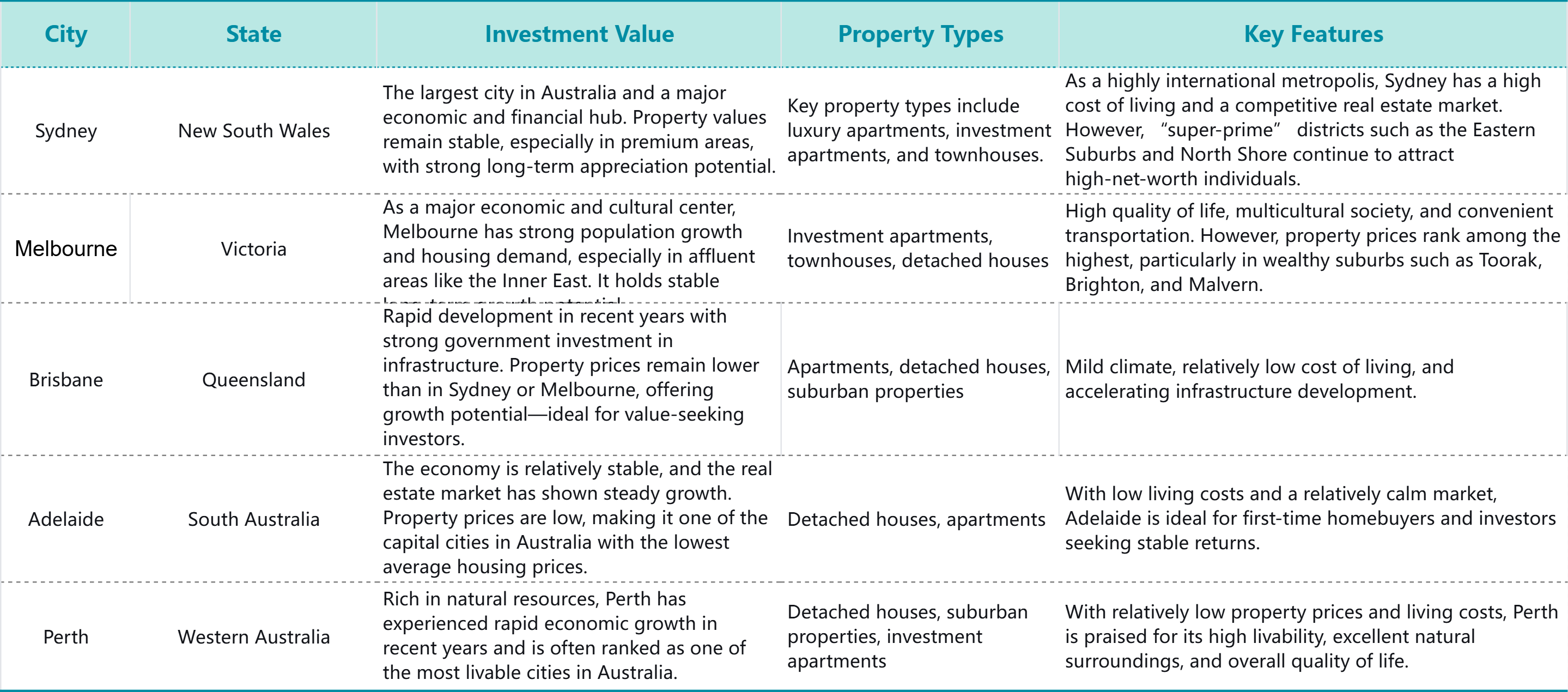
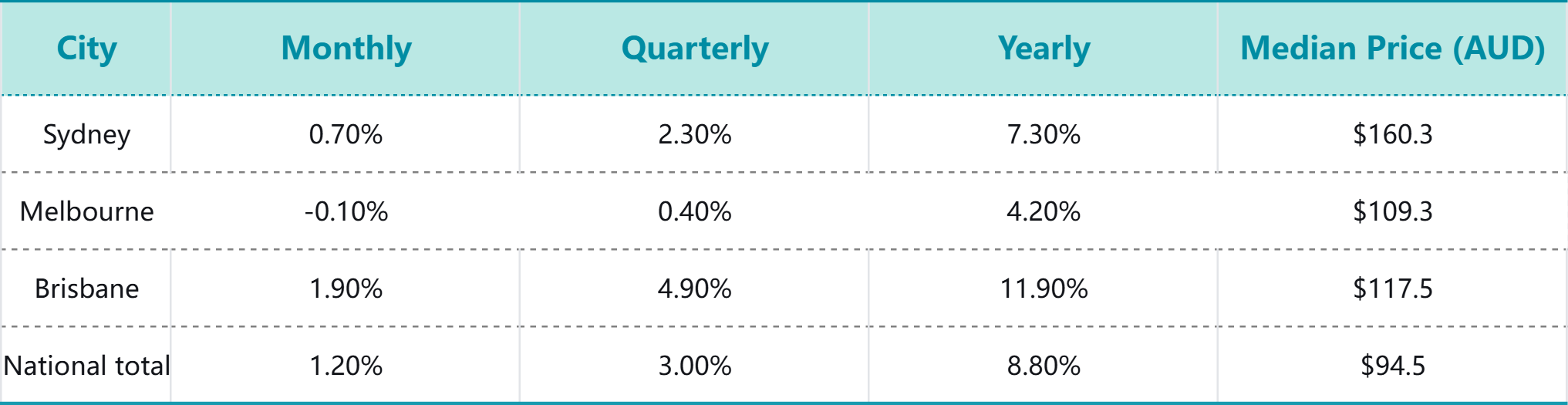
According to data from SQM Research, the Australian real estate market has experienced stable growth over the past 50 years. During this period, there have been approximately 5 adjustment cycles, each lasting about 1-3 years, followed by sustained periods of growth. Despite a global economic downturn, Australian house prices have risen against the trend even in the high-interest rate environment of 2022-2024. As of September 2025, house prices increased by 9.9% year-on-year, with an average annual increase of 8.5% over the past three years and 7.5% over the past ten years. Unit prices increased by 7.8% year-on-year, with an average annual increase of 6.7% over the past three years and 6.0% over the past ten years. Among them, Sydney's median price is the highest of all major cities. As of September 2025, the median house price is approximately AUD $2.09 million (up 9.4% year-on-year), and the median unit price is approximately AUD $880,000 (up 6.4% year-on-year).(Table: Major Australian cities' house price changes as of July 2021 compared to the past 12 months would be described here.)Sydney, Melbourne, and Brisbane are the main property transaction cities. According to housing transaction data provided by Housing Data for the year ending July 31, 2021, Sydney had 57,525 house transactions and 40,448 unit transactions; Melbourne had 53,683 house transactions and 25,223 unit transactions; Brisbane had 39,631 house transactions and 12,927 unit transactions.According to the FIRB Annual Report 2019-2020, the top five countries for investment in Australian real estate were:United States: US$13.1 billion;Singapore: US$9.5 billion;China: US$7.1 billion;Germany: US$3.7 billion;Canada: US$3.3 billion。Listing Price Trends :Sydney: Compared to the same period last year, the overall listing price in the Sydney area increased by 12% to AUD 1,300,836. Among them, houses increased by 14.4%, and units increased by 1.4%.Brisbane: Compared to the same period last year, the overall listing price in the Brisbane area increased by 12.8% to AUD 680,489. Among them, houses increased by 13.7%, and units increased by 4.5%.Melbourne: Compared to the same period last year, the overall listing price in the Melbourne area increased by 5.1% to AUD 991,312. Among them, houses increased by 5.6%, and units increased by 0.5%.Vacancy Rates:Sydney: As of August 2025, the latest data shows Sydney's vacancy rate at 1.4%. Brisbane: As of August 2025, the latest data shows Brisbane's vacancy rate at 1.0%.Melbourne: As of August 2025, the latest data shows Melbourne's vacancy rate at 1.8%.Brisbane: The latest data from July 2021 shows the overall vacancy rate in the Brisbane area was 1.3%. This represents a 2.8% decrease compared to the peak vacancy rate of 4.1% seen in the past decade. The vacancy rate has been consistently declining since December 2016.Melbourne: The latest data from July 2021 shows the overall vacancy rate in the Melbourne area was 3.6%. This represents a 1.1% decrease compared to the peak vacancy rate of 4.7% seen in the past decade. The vacancy rate has been consistently declining since the beginning of 2021.
Sydney: According to the latest data from September 2025, the median weekly rent for apartments is AUD 718, a year-on-year increase of 3.4%; the median weekly rent for houses is AUD 1,086, a year-on-year increase of 4.5%.Brisbane: According to the latest data from September 2025, the median weekly rent for apartments is AUD 614, a year-on-year increase of 7.4%; the median weekly rent for houses is AUD 770, a year-on-year increase of 6.2%.Melbourne: According to the latest data from September 2025, the median weekly rent for apartments is AUD 576, a year-on-year increase of 3.9%; the median weekly rent for houses is AUD 766, a year-on-year increase of 2.9%. Brisbane: According to the latest data from July 2021, the average weekly rent for apartments in the Brisbane area was AUD 395, a year-on-year increase of 0.6%; the average weekly rent for houses was AUD 701, a year-on-year increase of 11.4%.Melbourne: According to the latest data from July 2021, the average weekly rent for apartments in the Melbourne area was AUD 371, a year-on-year decrease of 5.9%; the average weekly rent for houses was AUD 520, a year-on-year decrease of 0.4%.

Rental Returns
Sydney: According to the latest data from September 2025, the gross rental yield for apartments is 4.2%, and for houses is 2.7%.Brisbane: According to the latest data from September 2025, the gross rental yield for apartments is 4.7%, and for houses is 3.1%.Melbourne: According to the latest data from September 2025, the gross rental yield for apartments is 4.3%, and for houses is 2.7%.

Investment Prospects
Advantages of Homeownership
The vast majority of properties have freehold title (perpetual ownership).High transparency of relevant information and a relatively well-established legal framework.The market is highly mature, offering relative investment stability and the potential for sustained growth trends.No inheritance tax.Properties are delivered fully finished and renovated.Down payments are supervised and held in government-regulated trust accounts; developers cannot access these funds before settlement.Relatively high rental returns.
Investment Prospects in Australia
The Australian economy demonstrates long-term stability. According to a 2021 Austrade report, despite experiencing droughts, bushfires, and the impacts of the COVID-19 pandemic, Australia showed strong resilience. In 2020, the government launched an economic stimulus package totaling 15.7% of GDP to support businesses and employment. Thanks to effective public health measures and strict lockdowns, the economic impact of the pandemic was less severe than in most developed countries. Australia's GDP fell by only 2.4% year-on-year in 2020, significantly lower than the average decline of 4.7% for advanced economies.As of 2021, Australia maintained its position as the world's 12th largest economy, with a public sector debt-to-GDP ratio of approximately 54%, far below the advanced economy average of 94%, indicating that its fiscal situation remained robust.

According to relevant Australian policies, overseas buyers (aged 18 and above) are generally only permitted to purchase new dwellings and are not allowed to purchase established homes (second-hand properties).

Purchase Costs
(See Screenshot)Stamp Duty:For foreign persons, stamp duty consists of two parts: the standard duty applicable to local investors, and an additional surcharge for foreign buyers. Each state has its own stamp duty policies, rates, and payment timelines, which vary. Details are as follows: (Note: For house and land packages, duty is typically only levied on the land portion).Legal Fees:Fees vary between law firms. Typically, one contract costs around AUD 1,650, while two contracts cost around AUD 1,980. The lawyer handles initial contract review, FIRB application, contract exchange, stamp duty payment, and all procedures through to the final settlement and transfer.Settlement Sundries:AUD 3,000 - 5,000, used to cover various government charges incurred during the settlement process and to settle council rates and other fees up to the settlement date. The law firm typically collects this amount in advance before settlement and refunds any surplus after settlement is complete.Loan Fees:Charges vary between lenders. Common basic fees include application fees, legal fees, valuation fees, settlement fees, and annual fees, generally amounting to approximately 1.5% - 3% of the loan amount.Ongoing Holding Costs:① Council Rates (Generally approx. AUD 1,800 - 3,000/year. The charge is primarily based on the local council's criteria for the property; fees differ even for properties in the same area depending on size).② Body Corporate/Strata Levies (Generally approx. AUD 1,500 - 5,000/year, depending on the specific property, its amenities, size, and common areas. Standalone houses typically do not have this fee).③ Water/Sewerage Charges (Approx. AUD 800 - 1,200/year, mainly based on the local council's standards for the property's area).④ Land Tax (Based on the government's valuation of the land. The calculation method is relatively complex; budgets can be estimated via relevant government websites).Property Management Fees (If Renting)① Letting Fee: Approximately 1.5 weeks' rent (one-time fee, charged after securing a tenant).② Management Fee: Charges vary by state. In Victoria and New South Wales, it's approximately 4.4% - 6.6% of the rental income; in Queensland, it's around 7.7% - 8.8% (charged monthly).③ Income Tax: Rental income is included in annual taxable income and taxed at the applicable income tax rate on the net income. There is no tax-free threshold for foreign residents; the tax rate starts at 32.5% and is calculated progressively. For details, visit the official website ato.gov.au. Note: Lodging tax returns requires engaging a qualified tax agent.Disposal Costs (When Selling).Capital Gains Tax (CGT): Taxed on the net gain at the applicable income tax rates.Legal Fees: Approx. AUD 600 - 1,500 (varies by law firm).Agent's Commission: Approx. 1.5% - 3.3% of the final sale price.

Purchasing an Apartment/Townhouse (Single Contract) Process:1. Pay a reservation deposit to secure the property.2. Sign the Sale and Purchase Agreement and pay the 10% deposit.3. Approximately six months before settlement, begin loan preparation: gather documents and submit for assessment.4. Pay the balance payment. The legal representative will send a settlement statement beforehand, and the client pays the amount as notified.5. Property transfer; sign the transfer documents.6. On the settlement day, the solicitor acts on the client's behalf to complete the settlement with the developer's solicitor at the agreed time and place. If a loan is involved, the client's bank will also participate (client presence is not required).7. Settlement completed, Property Handover - Rent/Occupy: After successful settlement, the solicitor sends a confirmation email. A settlement statement, including details, trust account balance, and title search documents, is issued within one to two months.Purchasing a Standalone House (Two Contracts) Process:1. Pay a reservation deposit to secure the property.2. Sign the Land Contract and the Building Contract, and pay the initial deposits (typically 10% for land, 5% for building).3. 3-6 months before land settlement, begin loan preparation: gather documents and submit for assessment.4. Pay the land balance payment. The solicitor will send a settlement statement beforehand, and the client pays the amount as notified.5. Land transfer; sign the land transfer documents.6. On the land settlement day, the solicitor acts on the client's behalf to complete the land settlement with the developer's solicitor at the agreed time and place. If a loan is involved, the client's bank will also participate (client presence is not required).7. Construction commences, and progress payments for the building balance are made in five stages (Slab/Base, Frame, Lock-up/Enclosed, Fixing/Fittings, Completion).8. Construction completed, Final Handover - Rent/Occupy.

Loan Policy
Overseas applicants are currently unable to obtain loans from Australian local banks. Therefore, financing is primarily available through fund-based products or international bank loans.Loan Terms:Loan-to-Value Ratio (LVR): As of September 2025, the LVR ranges from 30% to 85%.Interest Rate: Variable, approximately 6% - 6.5% (The specific rate fluctuates depending on the lender and the borrower's qualifications).Repayment Methods: Principal & Interest repayments or Interest-only repayments (subject to the policies of the specific lender and the borrower's profile). Loan Term: Up to 30 years.

Loan Process
Select a property, sign the contract, and pay the deposit.Six months before settlement (or six months before the expected completion date for off-the-plan purchases), choose a lender and contact a mortgage broker. Prepare the required documents as specified by the broker and submit them for assessment. Documentation requirements may vary slightly between lenders, but generally include fundamental materials such as:Loan application form;Proof of identity;Passport copies;Personal credit report;Contract of Sale;Proof of deposit;Upon successful initial assessment, receive and sign the loan pre-approval letter. (During this stage, the client may need to open a bank account in Australia).Property valuation is conducted by the lender;Receive full loan approval, sign the formal loan contract, and await fund disbursement by the bank on the settlement date.
Disclaimer: All country-related information provided above is sourced from the internet and is for reference only. Should there be any discrepancies with actual circumstances, please rely on the factual situation. If you identify any inaccuracies, please contact us promptly for corrections.